If you want to understand how AI is, and isn’t, changing what stakeholders think, it helps to have a real-world example in front of you. Coca-Cola is a good one.
What the LLMs actually say about Coca-Cola
For the past couple of months we’ve been tracking what the leading LLMs say about Coca-Cola when they’re prompted. Only 40% of those responses read as positive. The rest read as neutral.
I say “only” because the AI sentiment figures for three other companies we’ve been tracking are strikingly higher: 88% for an aerospace giant, 90% for a pharmaceutical company, 87% for a medical technology leader.
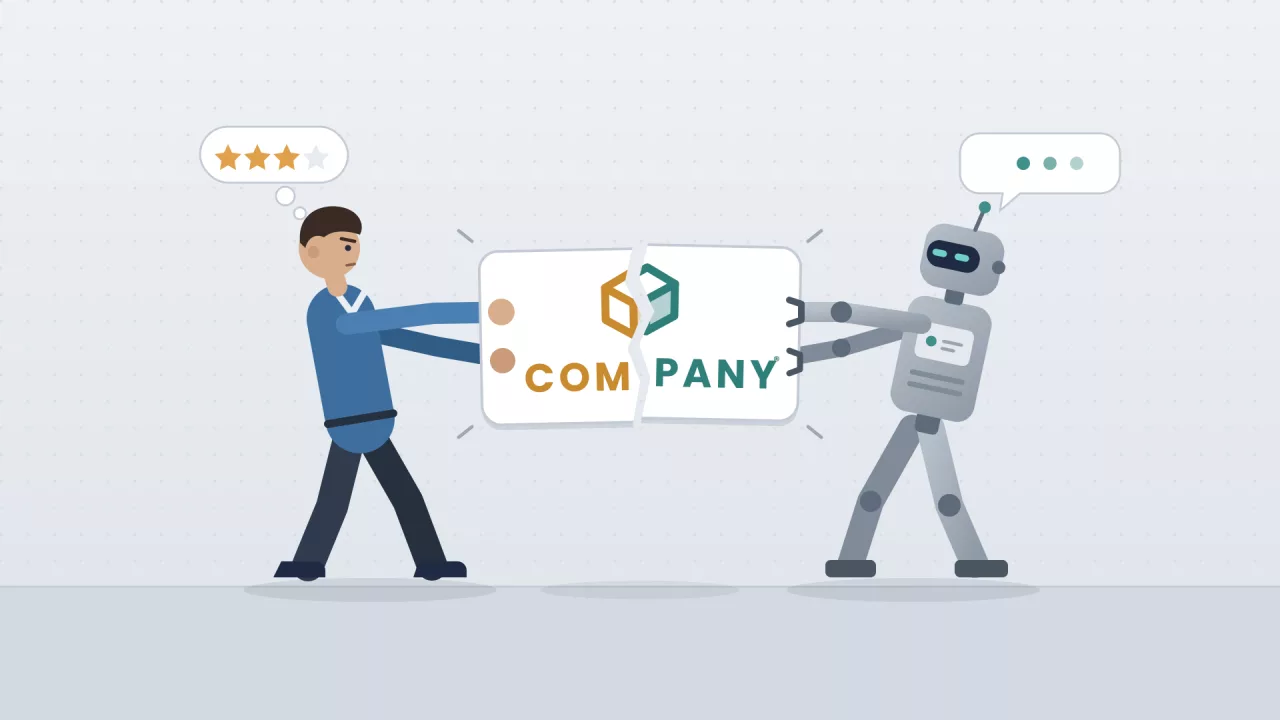
And yet Coca-Cola’s Trust & Like Score, our measure of what real people think and feel about a company, sits at 71 out of 100. The aerospace giant sits at 72. The pharma company at 75. The medtech company at 75. There’s barely any daylight between them, despite the sizeable gap in AI sentiment.
Why the human trust scores barely move
Part of the explanation is structural. The three comparison companies are B2B, a category that typically scores higher on trust than consumer brands, because its audience is smaller and more specialist: buyers, partners, employees, people with direct professional reasons to know a company well. Coca-Cola is about as consumer-facing as a brand gets, and it’s holding its own against companies with a built-in trust advantage.
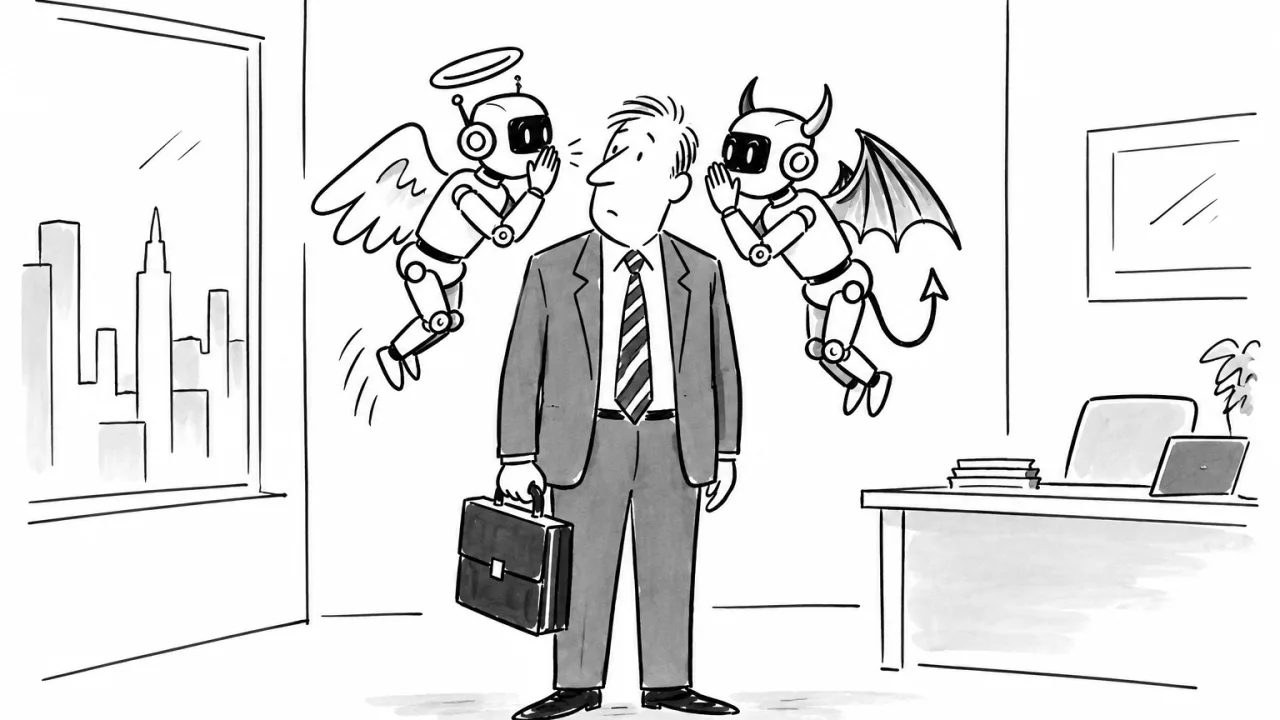
My read? Coca-Cola is coasting on decades of brand equity, on positive associations with sport, summer, gatherings, and good times that most companies never come close to earning. The LLM responses lean on a more challenging set of associations: Coke’s health impact, its water use in markets like India, the environmental damage caused by plastic bottles. That’s what accounts for the 60% of LLM responses that read as “neutral.”
“Neutral” is doing a lot of work
A sentiment score only tells you so much, though. We can also pull the actual responses and compare them side by side, which is exactly what we did with a sample from the last few days. And “neutral” undersells what’s happening.
The language is often more judgmental than merely descriptive. Coke is “less admired,” its reputation “mixed” or “tempered by familiar concerns.” Several responses go further still, framing the criticism as persisting despite Coca-Cola’s own efforts: sustainability pledges, packaging goals, and public commitments that, in the AI’s telling, haven’t yet closed the gap between what the company says and what it does.
So more than one in two AI responses about Coca-Cola isn’t neutral in any flat sense. It’s actively weighing a glowing account against the same three or four recurring criticisms, and landing on a draw.
There are competing narratives about the company, in other words, and for now the older, warmer one is still winning out with stakeholders. Hence Coke’s Trust & Like Score of 71. The same schism shows up elsewhere in our data: Coca-Cola’s ESG scores are meaningfully lower than its other attributes, while its brand-related scores stay especially strong.
People who research Coke with AI trust it more, not less
There’s another wrinkle. Among people who say they’ve used AI to research Coca-Cola, the Trust & Like Score climbs to 79, eight points higher than the company’s overall score. That seems counterintuitive. If AI is surfacing a less flattering narrative, you’d expect AI users to trust the company less, not more.
I think there are two possible explanations. The first is that people using AI to research Coca-Cola already know the “difficult” narrative and like the company anyway. They’re immune to the AI take, which should reassure Coke’s comms team, because it means AI’s influence isn’t “moving the needle,” to use the clichéd term that LLMs love.
The second is that the people turning to LLMs to learn more about Coca-Cola are disproportionately positive toward it to begin with, hence that score of 79, and are only now stumbling across the neutral narratives. If that’s the case, we might expect the gap between 79 and the overall 71 to narrow as more people get the full picture from AI. To find out, we’ll be keeping a close eye on those numbers.
Same company, different chatbot, different story
The last thing we’ll be watching is the wild variation in AI sentiment from platform to platform. Coca-Cola’s score is 13% positive on ChatGPT and 93% on Mistral. Depending on which chatbot someone opens, they’ll get a very different narrative.
Imagine it’s your company being researched on someone’s LLM of choice. If your investors default to one platform and your customers default to another, they may be forming opinions of you from what are effectively two different companies.
Mind the gap
The gap between Coca-Cola’s reputation among stakeholders and its reputation among LLMs typifies the challenge facing anyone tasked with building trust, protecting brands, and spotting reputational risks in the age of AI. That gap differs for every company, and it behooves every company to understand what its own one looks like.
After all, AI is doing to corporate reputation what media coverage has done for a century or more. Like the media, AI is best understood as a touchpoint or an influencer (albeit without the Dubai apartment and the ring-light setup), capable of shifting stakeholder perceptions overnight. A company’s media reputation was never quite its real one, and AI risks the same confusion, only faster.
The human-machine gap carries a real cost, too. Every hour spent managing what LLMs say about you is an hour not spent with the customer deciding whether to renew, or the employee already halfway out the door.
What I’ll be writing about next
This newsletter is broadly about the power of stakeholder intelligence to help businesses make smarter decisions, but over the coming weeks I want to explore topics specific to AI. That means examining how AI affects stakeholder perceptions and how to measure it, the reputational risks a company creates through its own use of AI (job losses, AI slop and misinformation, resource guzzling), and whether visible human judgment is becoming a genuine mark of trust, or whether that debate is far less settled than most people assume.
Where possible I’ll be doing this with real data, and I’d like it to be a conversation. Speaking of which, I’m hosting one on exactly this subject in October, alongside others who think about reputation, trust, and risk for a living.
(This article was originally published by Caliber CEO Shahar Silbershatz in his LinkedIn newsletter, What People Think. It has been adapted for publication on Caliber’s website.)