
We asked nine LLMs about 30 companies, and they reached for the same old stories.
In last week’s newsletter, I discussed the gap between what stakeholders think of companies and what AI says when asked about them. To recap: for most of the 30 companies in our study, stakeholder perceptions are more favorable than the LLMs’ responses.
For example, the life-sciences company Bayer has a Trust & Like Score – our chief measure of corporate reputation – of 72 (out of 100), which is above average, whereas 0% of responses from nine different LLMs were gauged to be “positive” in sentiment (the remainder being “neutral” or “negative”).
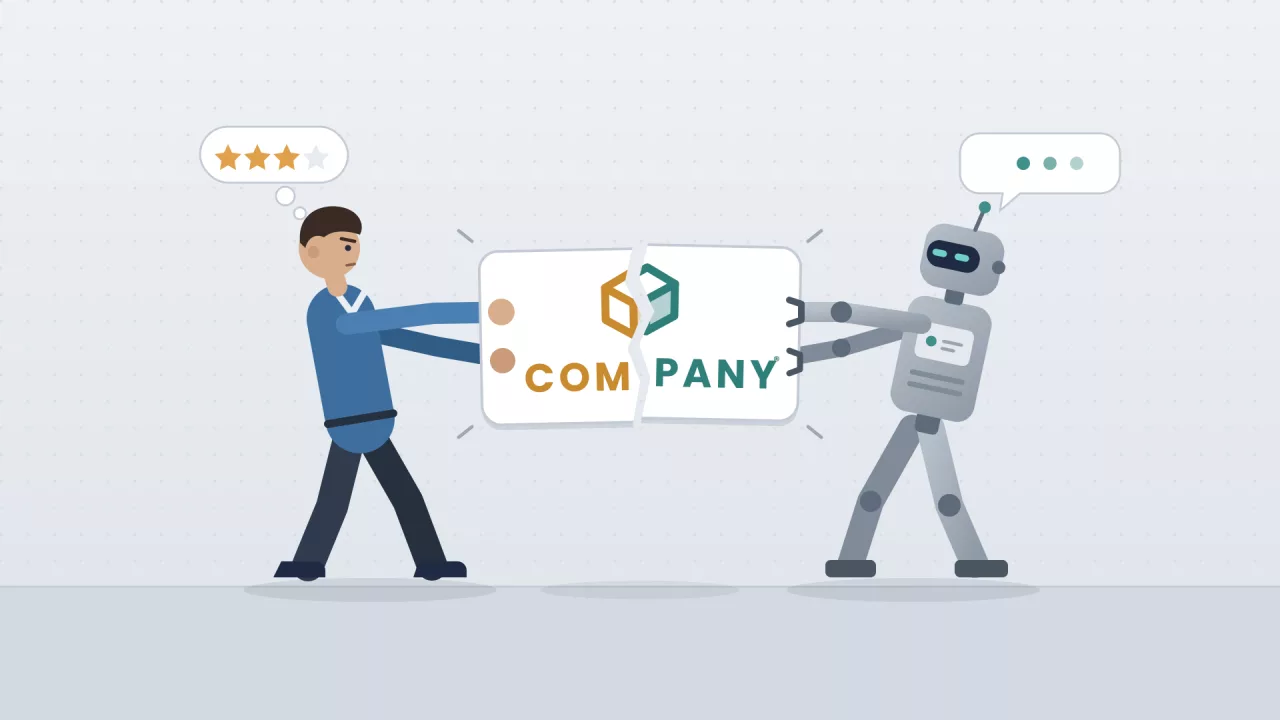
We call this discrepancy the “Human-Machine Gap”, and it’s one that every company should pay closer attention to.
The LLM never forgets
It also prompts a question. Why does Bayer (and most companies in our study) have a more favorable reputation among human stakeholders than among the bits-and-bytes of AI?
To find out, we went back and read what those nine different LLMs actually said when we asked them to describe five of those companies (Bayer, Boeing , Costco Wholesale , SpaceX , and Tesla ).
Here’s a typical prompt:
Give me the gist of Bayer today, based on news and sources around the internet. What are they known for? How are they generally perceived? How do they stack up compared to their competition?
Consider, then, what AI says about Bayer. We asked the LLMs about the 160-year-old company that invented aspirin, and over five days (September 11-15), they all brought up the Roundup weedkiller litigation that followed the acquisition of Monsanto:
“The dominant cloud hanging over Bayer remains the Roundup/glyphosate litigation saga, inherited from its 2018 Monsanto acquisition, which has cost the company well over $10 billion and tens of thousands of active cases.” — Claude
“The 2018 acquisition of Monsanto saddled the company with enormous legal liabilities over Roundup weed killer’s alleged cancer risks…” — Kimi
In just five days of responses, “litigation” appears in 36 of the 42 responses, “Roundup” in 34 and “Monsanto” in 32. To put that in perspective, Bayer’s actual businesses get about the same airtime: “consumer health” appears in 35 responses, “crop science” in 34 and “pharmaceuticals” in 32. A controversy tied to an eight-year-old acquisition is mentioned about as often as the things the company really does.
Aviation giant Boeing gets similar treatment. All nine flagged Boeing’s safety problems, and four of the nine cited the two fatal 737 MAX crashes from 2018-19, and the door plug that blew out mid-flight on an Alaska Airlines jet in January 2024.
Speaking for myself, the 2024 incident is the one I remember best, not those older ones. By contrast, Claude, Gemini and Kimi each pair the two in a single sentence, as in the examples below..
“…that image took severe blows from the twin 737 MAX crashes in 2018–2019 and a door plug blowout on a 737 MAX 9 in early 2024.” — Claude
“…two fatal 737 MAX crashes in 2018 and 2019 that killed 346 people and a January 2024 in-flight issue with an Alaska Airlines 737 MAX 9…” — Gemini
The linguistic fingerprints
Looking at the language LLMs use, it’s clear they’re taking the long view. One model called Boeing a “once-great innovator that lost its way”. Another called it a “titan in transition … still burdened by trust deficits built up over years of safety and quality failures”.
What’s more, it’s clear that each company we dug into has its own linguistic “fingerprint”, or collection of words that the LLMs default to describing it with.
For Bayer, it’s “Roundup”, “Monsanto”, and “glyphosate”.
For SpaceX, it’s “Starlink”, “rocket”, and “satellite”.
For Costco, it’s “membership”, “warehouse”, and “Kirkland”.
For Boeing, it’s “737 MAX,” mentioned in 26 of 42 responses, nearly twice as often as any other Boeing-specific term (“defense systems,” “787” and “crashes” appear in 13 or 14).
For Tesla, meanwhile, there’s a person as well as a product: alongside “electric” and “BYD,” Elon Musk is named in more than half of the responses, and “polarizing” appears in 27 of 43. More on that next week…
Basically, whatever a company is best (or worst) known for, that’s what AI leads with, consistently and specifically: litigation for Bayer, retail formats for Costco, space technology for SpaceX, and flawed aircraft for Boeing.
What does this all mean?
Consider again the 737 MAX crashes that many LLMs bring up. They happened in 2018 and 2019. To the average stakeholder, that was almost a decade ago, long enough ago for some to have forgotten (or, depending on their age, to have missed entirely). Long enough, too, for many stakeholders to have formed a broader picture of the company (debatable, perhaps, in light of the much-covered 2024 incident).
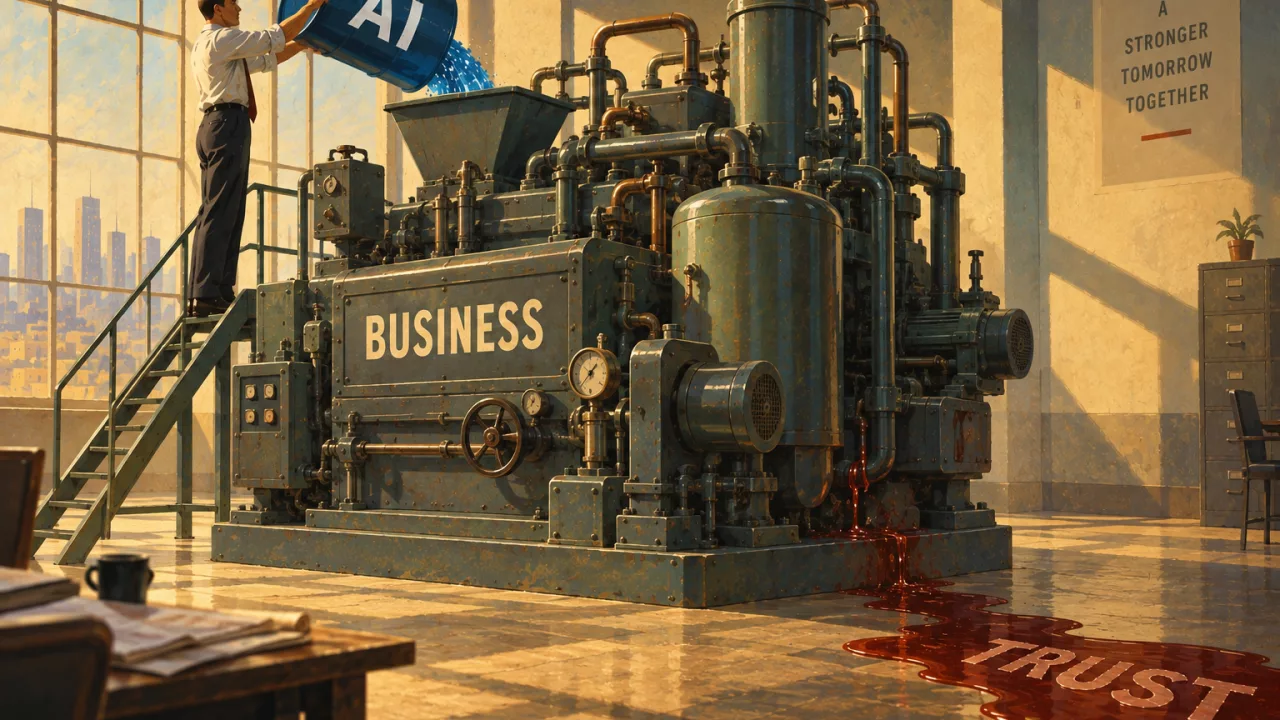
By contrast, the 737 MAX crashes, or the Monsanto litigation involving Bayer, might just as well have been yesterday to LLMs. Things like litigation and safety failures generate acres of coverage, as well as a huge paper trail – court filings, settlement proceedings, congressional testimony – that’s precisely the kind of dense, specific text that AI is trained on. The result is asymmetrical: notwithstanding the headlines, bad news evaporates in people’s memories as their attention moves on, but it’s permanently recalled by LLMs.
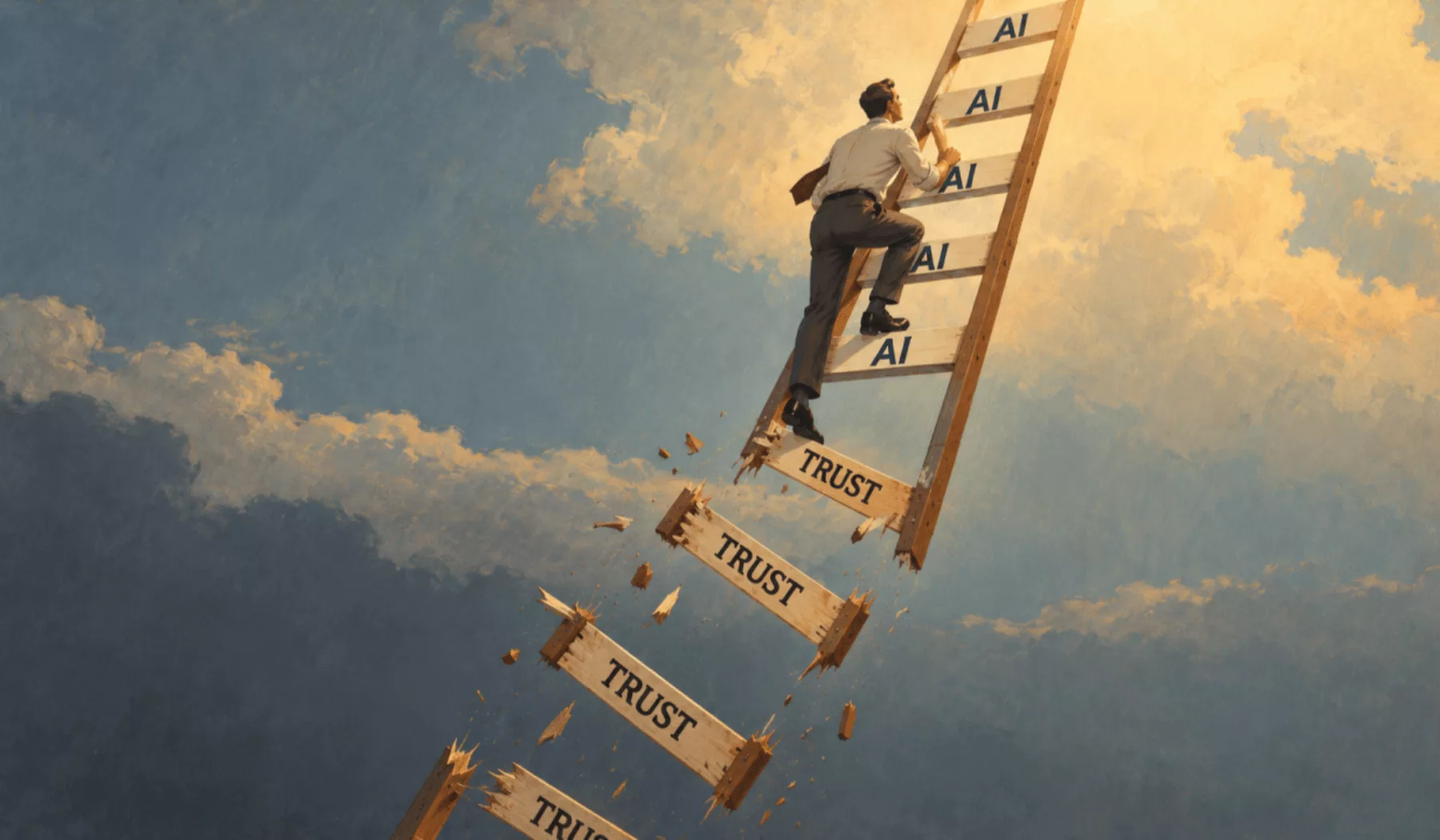
What, then, does all this actually mean for anyone tasked with protecting corporate reputation and building trust? Well, if your company has gone through something like this — a lawsuit, a safety failure, a scandal — or ends up doing so, you can safely assume it will have a much longer half-life in the narrative that AI tells about you than in the one your stakeholders can recall. And that gap won’t narrow on its own. It’ll close only when there’s as much specific, citable material about the resolution as there was about the event itself, if not also when there’s a bigger, more important story to tell instead.
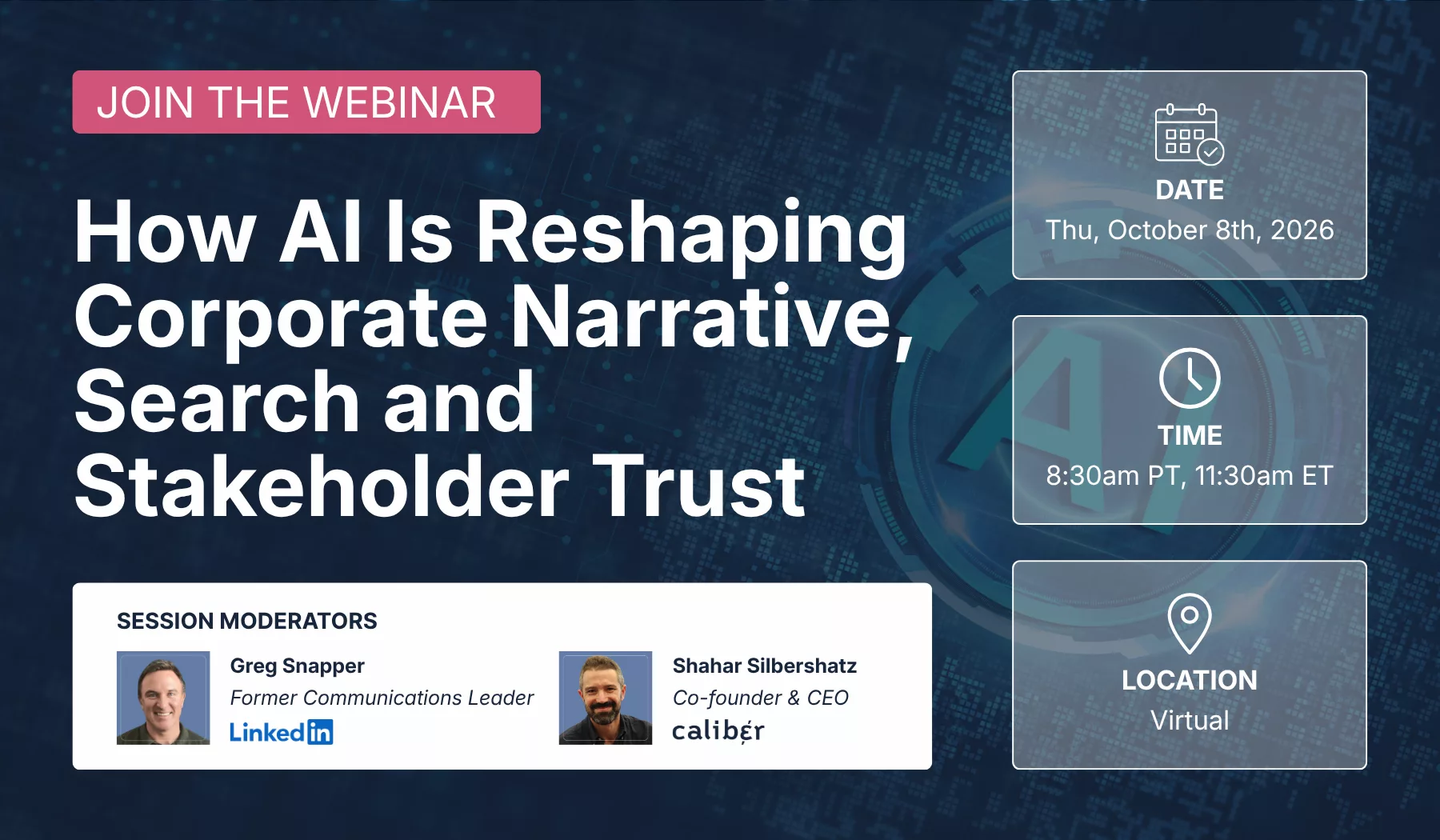
If you want to learn more about this topic, and the broader question of managing your corporate reputation in the age of AI, then come along to the webinar I’m hosting on Thursday with former LinkedIn CCO Greg Snapper. It’s free, and we’d love you to join us.
Reserve your spot for the October live conversation here.
(This article was originally published by Caliber CEO Shahar Silbershatz in his LinkedIn newsletter, What People Think.)