
Last reviewed: 28 October 2026. This page is reviewed quarterly. Spotted an error? Email [email protected]. Caliber is one of the providers in this guide. Descriptions of other vendors are based on their public websites and press materials at the time of review. Product names are trademarks of their respective owners.
Introduction
Reputation monitoring tools fall into four main categories: stakeholder intelligence platforms, reputation and brand trackers, media monitoring and social listening tools, and advisory firms that run their own research. Each measures something different. Choosing the right one starts with the question you need answered.
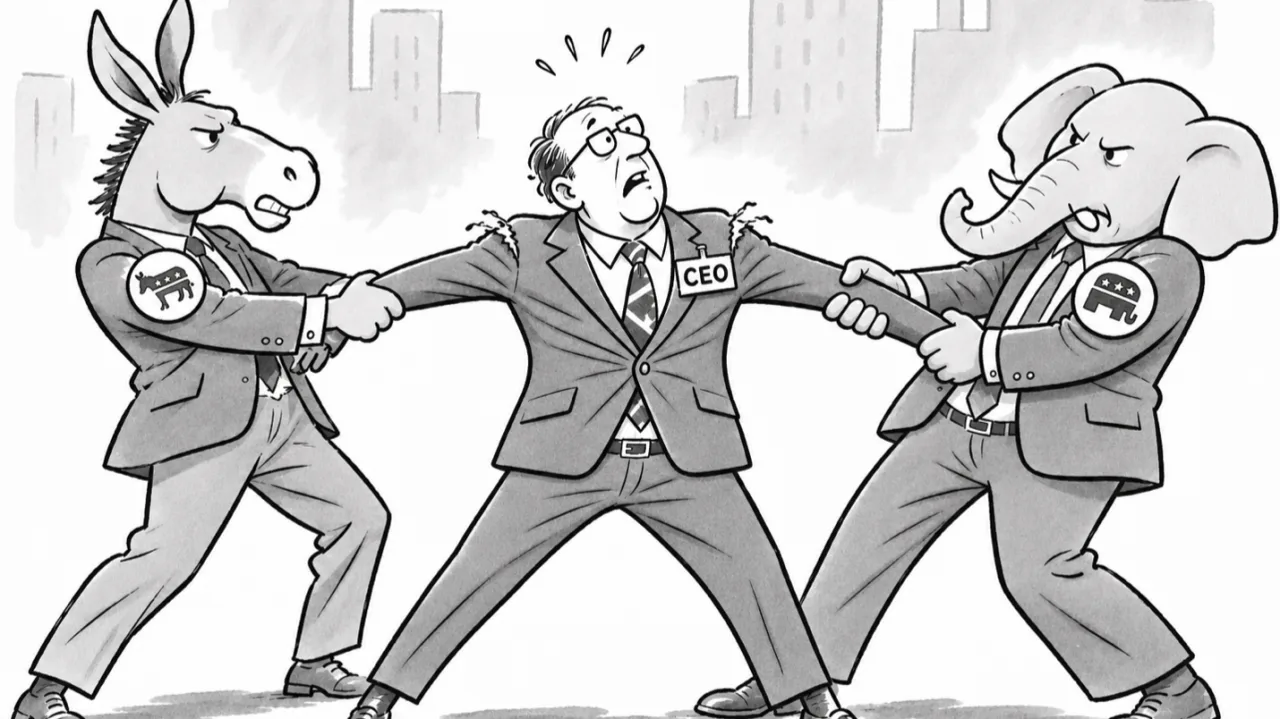
Corporate reputation matters more, and is more complicated, than ever. Trust, credibility and likeability shape your license to operate, your ability to hire top talent and how regulators and investors treat your company.
Reputation is part of a company’s intangible value. According to Ocean Tomo, part of J.S. Held, intangible assets made up about 92% of S&P 500 market value at year-end 2025.
The good news: the market for reputation monitoring tools has expanded. You have more options than ever to understand what people think about your company. As vendors evolve, merge and broaden their offerings, the space has also become harder to navigate.
You’ll hear brand trackers, media monitoring, social listening, opinion polls, reputation monitoring and brand monitoring used as if they mean the same thing. They don’t. Each measures something different, and the lines between them are often blurred.
That’s why we put this guide together. We’ve grouped the providers into four categories:
- Stakeholder Intelligence
- Reputation and Brand Tracking
- Media Monitoring and Social Listening
- Reputation Advisory and Hybrid Consulting
Polling and opinion research overlaps with several of these. Many brand trackers and advisory firms also run large polling operations, so we cover polling within those categories.
For each category, we explain what it delivers, what to consider and who the key providers are. This isn’t a perfect science. Larger firms often fit more than one bucket. The framework reflects how we see the space today.
Key takeaways
- Reputation measurement is going continuous. Daily data is joining annual and quarterly studies. Caliber collects survey data every day. RepTrak launched Compass in December 2025, The Harris Poll launched its daily QuestRQ tracker in July 2026, and Edelman’s Trust Stream updates daily.
- Survey, media and AI data are coming together in one view. Providers increasingly combine what stakeholders believe with what is said about a company. Ipsos RISE combines survey, news, social and regulatory data, and Caliber can add media monitoring, market and context data to its perception data. The newest source is generative AI: Meltwater, Signal AI and Caliber’s AI Impact now track how AI tools describe companies.
- Reputation is being tied to business outcomes. Burson’s Reputation Capital models eight reputation drivers against sales, stock price and purchase intent, and Maha Global links reputation to revenue and valuation. Caliber’s validation research identifies a relationship between its Trust & Like Score and stakeholders’ stated supportive behaviours, such as recommendation and advocacy. Intangible assets made up about 92% of S&P 500 market value at year-end 2025, according to Ocean Tomo.
Reputation Monitoring Tools by Category
There’s no one-size-fits-all reputation monitoring tool. Tools vary widely in how they track, measure and report. We’ve grouped them into four purpose-driven categories based on their core focus.
The tables summarize selected products or representative offerings from each provider rather than every solution in their portfolio. Data frequency, coverage and functionality refer to the named offering where specified and should not be interpreted as limitations of the provider’s other services.
For this guide, we use stakeholder intelligence to describe a particular approach to reputation measurement. Several providers covered in other categories offer overlapping capabilities, including continuous polling and multi-stakeholder analysis. We use Caliber as the example because it is the platform we know best.
1. Stakeholder Intelligence Platforms
What is stakeholder intelligence?
Stakeholder intelligence is continuous, survey-based measurement of how a company is perceived across stakeholder groups, linked to what those groups do. Instead of looking at consumers or media mentions in isolation, these solutions track perceptions among groups such as customers, employees, investors, talent and opinion leaders. How each group is reached varies: some are identified within continuous general-public samples, while specialist audiences are usually surveyed through custom research.
They connect trust, credibility and likeability to behaviours that drive business outcomes, such as advocacy, consideration, willingness to recommend and willingness to work for a company. Read more about real-time perception tracking.
Best for: Leaders who need continuous data instead of quarterly surveys or media volume as a proxy for reputation. Communications and corporate affairs teams use it to spot shifts early. ESG and employer brand leaders use it to show the impact of their work with stakeholder data.
What to consider: Stakeholder intelligence is a newer category. It requires a shift from periodic reporting and advisory-led models to digital, platform-first intelligence used in day-to-day decisions.
| Provider | Data frequency | Stakeholder coverage | Core data sources | Key products | AI features (as described by provider) | Typical use cases |
|---|---|---|---|---|---|---|
| Caliber | Daily data collection, results updated continuously in the platform | General public in each market, with segments such as customers, employees, investors, talent and opinion leaders; specialist groups surveyed on demand | Proprietary surveys through ESOMAR-compliant panel partners, combined with media monitoring, stock market, context and client data depending on setup | Stakeholder 360, Caliber Focus, Talent 360 | Sherlock AI assistant: plain-language questions, trend summaries and charts. AI Impact: how generative AI tools such as ChatGPT, Gemini and Claude describe the company, and how stakeholders who use AI to look it up perceive it (AI sentiment data available as an add-on) | Reputation tracking, issue response, ESG perception, employer brand, board reporting |
Source: Caliber. Reviewed October 2026.
Caliber
Caliber is a stakeholder intelligence platform founded in Copenhagen in 2016. It collects survey data every day from demographically representative samples of the general public in each market it covers. Stakeholder segments such as customers, employees, investors, talent and opinion leaders are identified from respondents’ socio-demographic and professional profiles. Harder-to-reach groups can be surveyed on demand. Caliber has conducted 6M+ interviews and monitors 3,000+ companies in 50+ countries. Caliber is named as a Representative Vendor in the Gartner® 2026 Market Guide for Reputation Health Tracking Providers (Patryck Allen, Kelly McHale, 22 June 2026).*
The dashboard centres on the Trust & Like Score, a measure of how much stakeholders trust and like a company, alongside deep segmentation and customizable views. Sherlock, Caliber’s AI assistant, answers questions about the data in plain language. Caliber brings multiple sources into one platform: depending on setup, clients can add media monitoring data from providers such as Polecat, Meltwater, Cision and Onclusive, plus stock market data, context data and their own campaign timelines, alongside perception data.
- Key offerings: Stakeholder 360 (multi-stakeholder tracking), Caliber Focus (custom deep dives on one audience), Talent 360 (employer brand and reputation), Sherlock (AI assistant).
- Best suited for: Communications, corporate affairs, ESG and HR leaders who need continuous, multi-stakeholder data, and executive teams and boards that want reputation tracking linked to behaviour.
2. Reputation and Brand Tracking Platforms
What is reputation and brand tracking?
Reputation and brand tracking tools use survey-based research to measure how companies and brands are perceived over time. Traditional models run quarterly or annually. Several providers now offer continuous data. Most track attributes such as trust, familiarity, advocacy, leadership, innovation and responsibility.
Best for: Establishing trend lines and benchmarks. These tools are widely used for board reporting, peer comparison and long-term brand and reputation work.
What to consider: Many of these trackers started as consumer or general-public studies. Several now cover more stakeholder groups and update more often. Check which audiences are surveyed directly, how often data is refreshed and how far the model can be customized.
| Provider | Data frequency | Stakeholder coverage | Core data sources | Key products | AI features (as described by provider) | Typical use cases |
|---|---|---|---|---|---|---|
| RepTrak | Continuous (RepTrak Compass) | Customers, employees, investors, regulators, influencers | Surveys across 7 reputation dimensions; Media Reputation Scores | RepTrak Platform, RepTrak Compass | AI-powered diagnostics (“Purposeful AI”) | Board-ready benchmarks, reputation and risk tracking |
| Maha Global | Continuous | Signals from media, analysts, regulators and communities | News, regulatory filings, earnings calls, analyst notes, social and market data | Darwin | Decision intelligence that scores the gap between what an organization does and what the market believes | Enterprise risk, linking reputation to revenue and valuation |
| YouGov BrandIndex | Daily | Consumers in multiple markets | Daily consumer interviews; 16 brand metrics | BrandIndex, YouGov Profiles | BrandIndex Voices (AI-powered interviewing) | Brand health, campaign evaluation, audience planning |
| Morning Consult | Daily | Consumers in multiple countries | Consumer surveys | Morning Consult Intelligence | AI Chat, AI Research Agents | Brand and reputation tracking, political and economic polling |
| Ipsos | Continuous (RISE) and bespoke programs | Defined per program | Surveys, news, social and regulatory data (RISE) | Reputation Tracking, Ipsos RISE, Ipsos Synthesio, Anholt-Ipsos Nation Brands Index | RISE: AI-powered reputation intelligence platform | Corporate reputation, issue and risk monitoring, policy-sensitive sectors |
| The Harris Poll | Daily (QuestRQ, QuestBrand); annual (Axios Harris Poll 100) | U.S. public (Axios Harris Poll 100); consumers in multiple markets (QuestBrand) | Surveys; Reputation Quotient (RQ) framework | Axios Harris Poll 100, QuestRQ, QuestBrand | AI assistant in QuestBrand; BERA predictive brand technology | Reputation benchmarks, brand tracking, public opinion polling |
| Kantar | Annual (BrandZ ranking) | Consumers in multiple markets (BrandZ) | Brand equity surveys combined with financial analysis | BrandZ, BrandZ Corporate Reputation reports | Not reviewed | Brand valuation, consumer insight, brand benchmarking |
Based on each provider’s public website and press materials, reviewed October 2026. Features change, so check details with each provider. Product names are trademarks of their respective owners.
Sources: RepTrak, Maha Global, YouGov, Morning Consult, Ipsos, The Harris Poll, Kantar.
RepTrak
RepTrak, formerly Reputation Institute, rebranded as The RepTrak Company in 2020. It has been majority-owned by Periscope Equity since November 2024. Its model measures reputation across seven dimensions: Products & Services, Innovation, Workplace, Leadership, Conduct, Citizenship and Performance.
- Key offerings: RepTrak Platform; RepTrak Compass (launched December 2025), which provides continuous data across stakeholders including customers, employees, investors and regulators; Media Reputation Scores.
- Best suited for: Global organizations that want structured, board-ready benchmarks, with an emphasis on comparability across industries and markets.
- Sources: rebrand, ownership, 7 dimensions, Compass, Media Reputation Scores.
Maha Global
Maha Global offers Darwin, which it describes as decision intelligence for enterprise risk. Darwin continuously ingests news, regulatory filings, earnings calls, analyst notes, social signals and market data, and links reputation to revenue and valuation.
- Key offerings: Darwin platform.
- Best suited for: Organizations with mature data capabilities that want to tie reputation and risk to financial outcomes. Sectors named on Maha’s site include healthcare, life sciences, pharma, automotive, financial services and industrial.
- Sources: Darwin, Maha Global.
YouGov BrandIndex
YouGov is a global research and data company. Its BrandIndex tracker runs daily consumer interviews across multiple markets. It reports 16 metrics, including Quality, Value, Corporate Reputation, Customer Satisfaction and Recommendation. YouGov also runs political and public opinion polling.
- Key offerings: BrandIndex; BrandIndex Voices (AI-powered interviewing); YouGov Profiles for audience analysis.
- Best suited for: Marketing and strategy teams that want daily brand health data across markets, and organizations that need international public opinion data.
- Sources: BrandIndex.
Morning Consult
Morning Consult is a Washington, DC-based decision intelligence company. Its Morning Consult Intelligence platform draws on daily consumer interviews and tracks brands across multiple countries. Brand metrics include favorability, trust, buzz, consideration and NPS. It also runs political and economic polling.
- Key offerings: Morning Consult Intelligence; AI Chat and AI Research Agents; Audience Intelligence.
- Best suited for: Brands that need daily consumer sentiment data, and public affairs teams that need political and economic polling.
- Sources: Morning Consult Intelligence, company announcement.
Ipsos
Ipsos is a global research and polling firm. Its corporate reputation practice runs bespoke reputation programs, which can be tailored to industries or regulatory contexts.
- Key offerings: Reputation Tracking; the Ipsos Reputation Council; Ipsos RISE (Reputation Intelligence for Strategic Evaluation), an AI-powered platform launched in 2023 that combines survey, news, social and regulatory data; Ipsos Synthesio for social listening; the Anholt-Ipsos Nation Brands Index.
- Best suited for: Multinationals and governments that need customized reputation or opinion research, especially in regulated or policy-sensitive sectors.
- Sources: Corporate Reputation, RISE, Synthesio.
The Harris Poll
The Harris Poll, a Stagwell company, has decades of history in public opinion and corporate reputation research. It is best known for the Axios Harris Poll 100, which ranks the reputations of the most visible companies in the U.S. using its Reputation Quotient (RQ) framework.
- Key offerings: Axios Harris Poll 100; QuestRQ (launched July 2026), a daily corporate reputation tracker built on RQ; QuestBrand, daily brand tracking across multiple markets; BERA predictive brand technology (acquired 2024).
- Best suited for: Companies seeking U.S. reputation benchmarks and media visibility, alongside public opinion polling.
- Sources: Axios Harris Poll 100, QuestRQ, QuestBrand, BERA acquisition.
Kantar
Kantar is a global research and data company. It is best known for BrandZ, its annual Most Valuable Global Brands ranking. Kantar has refocused on brand and marketing effectiveness and sold its Kantar Media business in 2025.
- Key offerings: BrandZ brand valuation; BrandZ Corporate Reputation reports built on BrandZ data; consumer and marketing analytics.
- Best suited for: Organizations seeking consumer insight and global benchmarking of brand value.
- Sources: BrandZ, Corporate Reputation, Kantar Media sale.
3. Media Monitoring and Social Listening Platforms
What is media monitoring and social listening?
Media monitoring and social listening tools track media coverage and online conversations. They measure volume, sentiment, share of voice and narrative trends across news, broadcast, podcasts, blogs, forums and social media.
Best for: Campaign evaluation, PR measurement and early warning of trending issues. Communications teams use them to see coverage and online discussion.
What to consider: These tools measure what is published and said. Media and social monitoring data on its own does not directly measure what stakeholders believe or intend to do; some vendors offer separate research products for that. Coverage reflects audiences who publish or post, which can differ from your wider stakeholder base. Many organizations use them alongside survey-based measurement.
| Provider | Data frequency | Coverage | Core data sources | Key products | AI features (as described by provider) | Typical use cases |
|---|---|---|---|---|---|---|
| Meltwater | Continuous | Media and social channels | Online news, broadcast, print, podcasts, social media, blogs, forums, AI-generated answers | Media monitoring, social listening, GenAI Lens | Mira AI assistant; AI-generated summaries | PR monitoring, measurement, benchmarking |
| Talkwalker (Hootsuite) | Continuous | Online and social conversations | Websites and social channels | Lumen by Talkwalker | Wisdom AI (formerly Blue Silk™ AI); image and video detection | Social listening, consumer insight, trend monitoring |
| Signal AI | Continuous | Media, regulatory and AI-model sources | Media, podcasts, broadcast, social, regulatory documents, LLM citations | Signal AI platform | AIQ engine | Risk and reputation monitoring, regulatory risk |
| Onclusive | Continuous | Media and social channels | Media monitoring; social listening (Onclusive Social) | Onclusive platform, Onclusive Social (formerly Digimind) | PR Attribution™, combining deterministic data with AI | PR measurement, earned media evaluation |
| Cision | Continuous | Media, journalists and social channels | Media monitoring; journalist and outlet database | CisionOne, PR Newswire | AI Coverage Analysis; narrative tracking | PR monitoring, media outreach, press release distribution |
| LexisNexis | Continuous, plus archives | News sources | News sources | Nexis Newsdesk; Nexis+ with Protégé (separate research product) | None in Newsdesk; AI research through the separate Nexis+ with Protégé | News research, risk research, archive access |
| Dow Jones Factiva | Continuous, plus archives | Business news | Premium business publications and newswires | Factiva | Factiva Smart Summary | Business research, competitive intelligence |
| Brandwatch (Cision) | Continuous | Online and social conversations | Social platforms, blogs, forums | Brandwatch Consumer Intelligence | Iris AI | Social listening, consumer research |
Based on each provider’s public website and press materials, reviewed October 2026. Features change, so check details with each provider. Product names are trademarks of their respective owners.
Sources: Meltwater, Talkwalker, Signal AI, Onclusive, Cision, LexisNexis Newsdesk, Nexis+ with Protégé, Factiva, Brandwatch.
Meltwater
Meltwater is a global media intelligence provider. It monitors online news, broadcast, print, podcasts, social media, blogs and forums, and how brands appear in AI-generated answers.
- Key offerings: Media monitoring and social listening; Mira AI assistant and AI-generated summaries; data integrations including a Power BI connector and API.
- Best suited for: PR and communications teams that want global media and social coverage in one platform.
- Sources: media monitoring, integrations.
Talkwalker
Talkwalker, acquired by Hootsuite in 2024, is a consumer intelligence and social listening platform now marketed as Lumen by Talkwalker. It covers websites and social channels and includes AI image and video detection.
- Key offerings: Social listening and consumer intelligence; Wisdom AI (formerly Blue Silk AI).
- Best suited for: Marketing and communications teams monitoring brand conversations, influencer activity and social trends.
- Sources: Talkwalker by Hootsuite.
Signal AI
Signal AI positions itself as AI-powered risk and reputation intelligence. It analyzes published media, podcasts, broadcast, social media, regulatory documents and citations in AI models.
- Key offerings: AIQ engine; reputation and risk intelligence alerts.
- Best suited for: Corporates that want AI-driven monitoring of regulatory, media and reputational risk narratives.
- Sources: Signal AI platform.
Onclusive
Onclusive was formed in January 2022, when Symphony Technology Group combined Kantar’s Reputation Intelligence business with Onclusive and PRgloo. It offers media monitoring, PR measurement and social listening.
- Key offerings: Media monitoring and analytics; PR Attribution™; Onclusive Social (formerly Digimind).
- Best suited for: Communications teams that want PR measurement and earned media evaluation.
- Sources: formation, Onclusive Social.
Cision
Cision is a global PR software company that owns PR Newswire and Brandwatch. Its CisionOne platform combines media monitoring, a journalist and outlet database, and press release distribution.
- Key offerings: CisionOne; PR Newswire distribution; AI Coverage Analysis and narrative tracking.
- Best suited for: PR teams that want monitoring, outreach and distribution in one tool.
- Sources: CisionOne, AI Coverage Analysis, Brandwatch acquisition.
LexisNexis
LexisNexis provides news, company and risk data. Nexis Newsdesk is its media monitoring product. Nexis+ with Protégé (formerly Nexis+ AI) is a separate AI-powered research platform.
- Key offerings: Nexis Newsdesk (media monitoring); Nexis+ with Protégé (separate AI research platform).
- Best suited for: Communications, risk and research teams that need access to news archives.
- Sources: Nexis Newsdesk, Nexis+ with Protégé.
Dow Jones Factiva
Factiva is Dow Jones’ business news database. It aggregates premium publications and newswires.
- Key offerings: Factiva; Factiva Smart Summary (launched November 2024).
- Best suited for: Analysts and communications teams that need business news sources.
- Sources: Factiva Smart Summary.
Brandwatch
Brandwatch, part of Cision since 2021, is a social listening platform that analyzes online conversations across social platforms, blogs and forums.
- Key offerings: Brandwatch Consumer Intelligence; Iris AI.
- Best suited for: Marketing teams focused on social media and consumer conversations.
- Sources: Brandwatch, Brandwatch Consumer Intelligence.
For a closer look at online reputation management tools, including review and ratings platforms, see our guide to online reputation management.
4. Reputation Advisory and Hybrid Consulting Firms
What is reputation advisory and hybrid consulting?
These firms combine strategic reputation advisory with proprietary research, indexes or rankings. Examples include annual trust surveys, AI-enabled measurement frameworks and brand valuation models, paired with consulting support.
Best for: Board-level strategy, crisis management and narrative development, when organizations want both data and hands-on advice.
What to consider: Much of the flagship research in this category runs on an annual or periodic cycle, though several firms now offer continuous products. Delivery models vary between consultant-led research and self-service platforms. Check how you will access the data and how often it updates.
| Provider | Data frequency | Stakeholder coverage | Core data sources | Key products | AI features (as described by provider) | Typical use cases |
|---|---|---|---|---|---|---|
| Burson | Near real-time (Reputation Capital) | Defined per engagement | Eight reputation drivers modeled against sales, stock price, purchase intent and loyalty | Reputation Capital; reputation advisory | AI-powered analysis, validated by Augmented Intelligence Labs (a University of Oxford enterprise) | Quantifying reputation’s business impact, C-suite advisory |
| FGS Global | Continuous polling (ReputationIQ) | Defined per client | Proprietary polling; media analysis | IQ Suite: ReputationIQ, MediaIQ | MediaIQ: AI-enabled media analysis | Reputation measurement with advisory, transactions, complex stakeholder situations |
| Interbrand | Annual (Best Global Brands) | Brand valuation | Financial analysis, role of brand, brand strength | Best Global Brands; brand valuation and strategy | Not reviewed | Brand valuation, brand and portfolio strategy |
| Edelman | Annual (Trust Barometer); daily (Trust Stream) | General public in multiple countries (Trust Barometer) | Trust Barometer survey; Trust Stream data | Edelman Trust Barometer, Edelman Trust Management | ArchieAI (trust-based large language model); Edelman Net Trust Score | Trust benchmarking, strategy, crisis counsel |
| Penta | Continuous signals; semi-annual policymaker survey | Policymakers, investors, customers, employees | Signal analysis; global policymaker survey; Economic Sentiment Index | Intelligence, Advisory, Campaigns, AI Transformation services | AI Transformation advisory | Policy, regulatory and reputation advisory |
Based on each provider’s public website and press materials, reviewed October 2026. Features change, so check details with each provider. Product names are trademarks of their respective owners.
Sources: Burson, FGS Global, Interbrand, Edelman, Penta.
Burson (Reputation Capital)
Burson was formed in July 2024 through the merger of BCW and Hill & Knowlton. In June 2025 it launched Reputation Capital, an AI-powered technology and consulting solution. It models how eight reputation drivers (citizenship, creativity, governance, innovation, leadership, performance, products and workplace) relate to sales, stock price, purchase intent and loyalty. Burson says the model was validated by Augmented Intelligence Labs, a University of Oxford enterprise.
- Key offerings: Reputation Capital, with near real-time analysis; reputation advisory.
- Best suited for: Large organizations that want to quantify the business impact of reputation, with advisory support alongside the technology.
- Sources: Reputation Capital launch, drivers, product page, merger.
FGS Global (IQ Suite)
FGS Global is a strategic communications firm. Its IQ Suite combines ReputationIQ, a continuous polling-based reputation measure, with MediaIQ, an AI-enabled media analysis solution. FGS positions the suite for managing reputation in the “stakeholder economy”.
- Key offerings: ReputationIQ; MediaIQ; strategic advisory.
- Best suited for: Businesses that want reputation data paired with strategic counsel, for example in transactions or complex stakeholder situations.
- Sources: IQ Suite, ReputationIQ, MediaIQ.
Interbrand
Interbrand is a global brand consultancy best known for its annual Best Global Brands ranking. The ranking values brands using three components: financial analysis, the role of brand in purchase decisions and brand strength.
- Key offerings: Best Global Brands; brand valuation; brand strategy consulting.
- Best suited for: Marketing and strategy leaders who need brand valuation for financial or positioning purposes.
- Sources: Best Global Brands, methodology.
Edelman
Edelman is a global communications firm best known for the Edelman Trust Barometer. The annual study surveys the public in multiple countries about trust in business, government, media and NGOs.
- Key offerings: Edelman Trust Barometer; Edelman Trust Management, including Trust Stream (continuous data, updated daily), the Edelman Net Trust Score and ArchieAI.
- Best suited for: Organizations seeking an annual trust benchmark and counsel on positioning during societal shifts or crises.
- Sources: Trust Barometer 2026, Trust Management, Trust Stream, ArchieAI, Net Trust Score.
Penta
Penta Group is a stakeholder communications and reputation intelligence firm. It launched in 2022, combining Hamilton Place Strategies with several research and analytics firms. Shamrock Capital invested in Penta in August 2025. Penta works across policymakers, investors, customers and employees.
- Key offerings: Intelligence, Advisory, Campaigns and AI Transformation services; a semi-annual global policymaker survey; the Economic Sentiment Index.
- Best suited for: Organizations in regulated or politicized environments that want a data-informed advisory partner with policy and regulatory expertise.
- Sources: launch, Shamrock Capital, services.
How to Choose the Right Reputation Monitoring Tool
The right reputation monitoring tool depends on your objectives, your stakeholders and how you want to work. These questions guide the decision.
What business question do you need to answer?
- Consumer brand health (awareness, preference, ad impact) → brand tracking
- Media coverage and campaign visibility → media monitoring and social listening
- Board-level reputation benchmarks → reputation tracking
- Multi-stakeholder trust and behavioural outcomes → stakeholder intelligence
Once you’ve chosen your approach, set clear KPIs for managing stakeholder perceptions that align with your business objectives.
Which stakeholders matter most right now?
- If your focus is consumers, a consumer brand tracker or polling firm may be enough.
- If you need employees, investors, talent, opinion leaders and the public too, look for multi-stakeholder coverage. Ask each vendor which groups it surveys directly.
Learn more about measuring stakeholder perceptions in real time.
How quickly do you need insights?
- Annual or quarterly snapshots can work for long-term reporting.
- Daily or continuous data helps when you want to track campaigns in flight, spot issues early or show the short-term impact of communications.
How digital-first do you want to be?
- If you value ongoing hands-on support and strategic advice, a consultancy-led model may suit you.
- If you want direct control of how and when you access insights, with expert support when needed, look for a digital-first platform.
Do you want to monitor or to manage?
- Monitoring data shows what is being said and how coverage develops.
- Survey-based measurement shows what stakeholders believe and how that links to behaviour. Many organizations use both.
How much customization do you need?
- Syndicated trackers are built for comparability across companies, with a fixed set of measures.
- Custom research offers flexibility, usually with more set-up time and resources.
- Stakeholder intelligence platforms are designed to combine both: tailored attributes, KPIs and stakeholder segments, benchmarked against peers.
The Future of Reputation Monitoring: Key Shifts
1. From customers to all stakeholders
For years, reputation was tracked through the lens of the customer. Tools like NPS and brand loyalty surveys assumed that if customers were happy, the company was safe.
Customers are only one stakeholder group, and often not the most decisive. Employees shape whether you can attract or retain talent. Investors influence your cost of capital. Regulators and policymakers can accelerate or halt market access. Activists, NGOs and the informed public influence whether your business is trusted to operate.
Reputation has become a multi-stakeholder equation. The question has moved from “Do customers like us?” to “Do all our stakeholders trust us enough to support our license to operate and grow?”
2. From static reports to continuous, tech-enabled insight
Quarterly surveys and annual brand trackers were long the standard. When trust can shift in days, waiting weeks for results leaves leaders exposed to risks that are already unfolding.
The industry has moved. Continuous data collection lets companies follow stakeholder perceptions continuously, across markets and demographics. Several survey-based trackers launched continuous products in 2025 and 2026. AI now helps combine survey results with media coverage, social signals and context data. We expect more vendors to add predictive analytics, for example to anticipate purchase intent or employee attrition.
The frontier is expanding. Some vendors are testing synthetic audiences to simulate how stakeholder groups might respond before a campaign or announcement goes public. Others are building models to detect weak signals before an issue escalates.
The result: reputation measurement is moving from static reporting toward a continuous decision system that helps leaders adapt before risks turn into crises.
3. From predictable to polarized environments
The context in which companies operate has also shifted. Reputation risks used to feel episodic: a product recall, a financial misstep, a poorly handled crisis.
Today, risks are constant and amplified by polarization. Information spreads faster than corrections, and what builds credibility with one group can trigger backlash with another. A policy statement meant to reassure investors may alienate employees. An ESG campaign welcomed in one market may meet skepticism in another.
Organizations need proactive issue detection that spots emerging risks before they become crises. Tools now exist to track how narratives split across stakeholder groups, flag misinformation and stress-test scenarios, so leaders are better prepared when flashpoints arise.
4. In our view: stakeholder intelligence is the new standard
Together, these shifts set a new baseline. Companies are moving from single audiences to integrated stakeholder views, from static snapshots to live dashboards, and from reactive crisis response toward anticipating issues.
We believe the emerging standard is stakeholder intelligence: continuous data collection, AI-driven analysis and multi-stakeholder coverage in one platform. It shows where trust is heading, which groups are moving and how that links to what they do.
For communications and corporate affairs leaders, that means:
- Board decisions backed by data that links reputation to stakeholder behaviour
- Earlier warning signals, so teams can respond before issues escalate
- ESG and CSR reporting grounded in how stakeholders perceive performance
- Evidence of how communications build trust and loyalty
We believe stakeholder intelligence will become the core of modern reputation work, in a world where trust is fragile, polarized and in constant motion.
Conclusion
The reputation space is in transition. Consumer brand tracking and media monitoring still matter, and they remain part of the picture. The landscape now also includes continuous, multi-stakeholder measurement shaped by new technology, new expectations and new risks.
In our view, real-time data collection, AI-driven analysis and multiple stakeholder perspectives will become the baseline for how reputation is understood and managed. In an environment of polarization, activism and scrutiny, leaders need insights that help them anticipate and act.
This matters for ESG reporting and strategy, where stakeholder perceptions increasingly shape business outcomes.
The challenge is no longer whether to invest in reputation monitoring tools. It is how to choose approaches that stay relevant as stakeholder trust becomes more fragile and more valuable. Organizations that adapt can use reputation as a strategic asset for growth and resilience.
Frequently Asked Questions
What are the best reputation monitoring tools?
The best reputation monitoring tool depends on the question you need answered. Many providers now span more than one category, so treat these as starting points, grouped by each provider’s primary focus.
- Continuous perception data across stakeholder groups, linked to behaviour, with the option to add media, market and AI data in one platform: stakeholder intelligence platforms such as Caliber.
- Reputation and brand tracking and benchmarks, with several providers now offering continuous data: RepTrak, Maha Global, YouGov BrandIndex, Morning Consult, Ipsos, The Harris Poll and Kantar.
- Media coverage, online conversation and risk signals: Meltwater, Talkwalker, Signal AI, Onclusive, Cision, LexisNexis, Dow Jones Factiva and Brandwatch.
- Proprietary research, indexes and models paired with strategic counsel: Burson, FGS Global, Edelman, Interbrand and Penta.
Some providers in other categories also link reputation to business or financial outcomes, including Burson and Maha Global.
What is stakeholder intelligence?
Stakeholder intelligence is the continuous measurement of how a company’s stakeholders perceive it, combined with the other data that explains why those perceptions change and what they lead people to do.
It has three parts:
- Direct perception data. Ongoing surveys ask people how much they trust and like a company, how they rate it, and whether they would recommend it, buy from it or work for it. Groups such as customers, employees, investors, talent and opinion leaders are tracked continuously. Specialist audiences are often added through custom research.
- Multi-source context. Perception data is analysed alongside media coverage, social and market data, and a company’s own information, such as campaigns, events and business KPIs. This shows what may be moving perceptions, not just that they moved.
- Analysis and interpretation. AI tools and experts connect these sources and turn them into clear next steps for communications, brand, HR, risk and leadership teams.
The result is a continuous view of how stakeholders see a company, why that is changing, and how it links to the behaviours that matter for the business.
What’s the difference between stakeholder intelligence and a traditional brand tracker?
A traditional brand tracker measures how consumers see a brand. Stakeholder intelligence measures how a company is seen by several stakeholder groups, and combines that with other data to explain what is changing and why.
The main differences:
- Audience. Brand trackers usually survey consumers or the general public. Stakeholder intelligence tracks groups such as customers, employees, investors, talent and opinion leaders. Specialist audiences are often added through custom research.
- What is measured. Brand trackers focus on brand health measures such as awareness, consideration and purchase intent. Stakeholder intelligence focuses on trust, reputation and the behaviours they lead to, such as recommending, investing in or working for a company.
- Data sources. Brand trackers are mainly survey-based. Stakeholder intelligence combines survey data with media, market and company data.
- Who uses it. Brand trackers are mostly used by marketing teams. Stakeholder intelligence is used across communications, corporate affairs, HR, risk and leadership.
The line between the two is blurring. Some brand trackers now offer continuous data or wider stakeholder coverage, so ask each vendor which groups it surveys directly, how often data updates and which other data sources it includes.
Is media monitoring the same as reputation monitoring?
No. Media monitoring and social listening track what is published and said: coverage volume, sentiment and share of voice. Reputation monitoring measures what stakeholders believe, which can move independently of media volume. A company can lead the headlines while trust shifts, or have a quiet news cycle while perceptions change.
Can media monitoring and stakeholder intelligence be used together?
Yes. Media data shows what was said; survey data shows how stakeholders responded. Caliber, for example, can bring media monitoring data from several providers into its platform alongside perception data, depending on setup.
Should I choose a digital-first platform or an advisory-led firm?
It depends on how much strategic support you want alongside the data. Advisory-led firms pair proprietary research with consulting, which helps with board-level strategy and crisis narratives. Digital-first platforms give your team direct, continuous access to the data, with expert support when needed.
How do I know which category of reputation monitoring tool is right for my company?
Start with the business question. Consumer brand health points to brand trackers. Media coverage and campaign visibility point to media monitoring. Multi-stakeholder trust and behaviour point to stakeholder intelligence. Board-level strategy with hands-on counsel points to advisory firms. See “How to Choose the Right Reputation Monitoring Tool” above for the full framework.
*Gartner, 2026 Market Guide for Reputation Health Tracking Providers, Patryck Allen, Kelly McHale, 22 June 2026. GARTNER is a registered trademark and service mark of Gartner, Inc. and/or its affiliates in the U.S. and internationally. All rights reserved. Gartner does not endorse any vendor, product or service depicted in its research publications, and does not advise technology users to select only those vendors with the highest ratings or other designation. Gartner research publications consist of the opinions of Gartner’s research organization and should not be construed as statements of fact. Gartner disclaims all warranties, expressed or implied, with respect to this research, including any warranties of merchantability or fitness for a particular purpose.