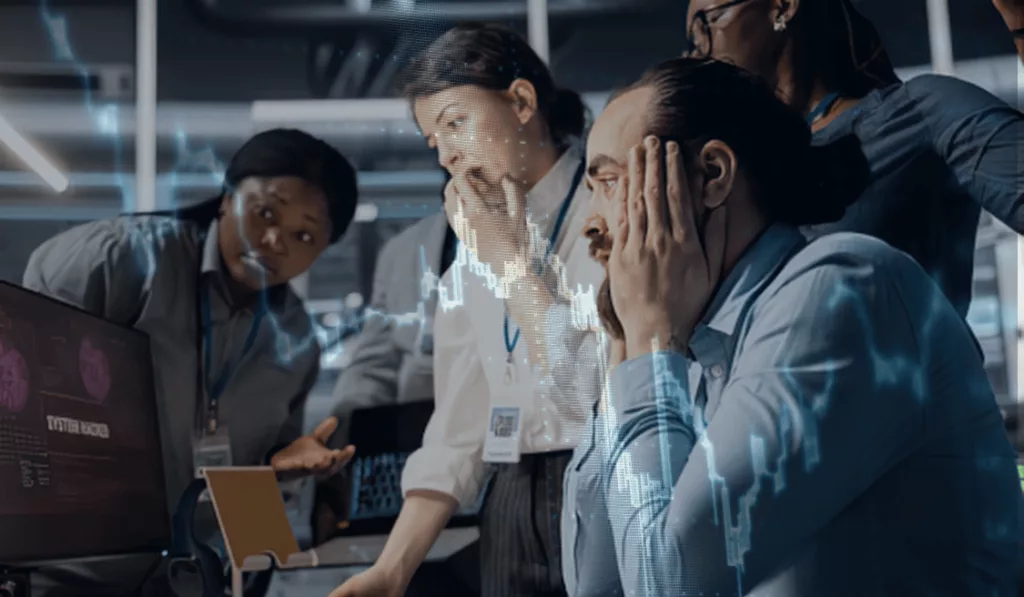
“Everyone has a plan until they get punched in the mouth.” Mike Tyson’s line has become a favorite of crisis consultants, and it earns its place. Companies rarely fail at crisis management because they lack a plan. They fail because nobody warned them the punch was coming.
Crisis management is the discipline of preparing for, responding to, and recovering from events that threaten an organization’s operations, reputation, or stakeholder trust. That definition sounds procedural. In practice, it’s almost always a trust test. When something goes wrong, stakeholders pay far less attention to the technical fix than to how leadership communicates, who takes responsibility, and what the company does when the pressure is on.
The cases below cover twenty-one corporate crises across leadership failures, values conflicts, and operational breakdowns. They come from different industries and continents, and they share a pattern worth understanding before your own plan meets its first real punch.
Key takeaways
- Corporate reputation carries real balance-sheet weight. Echo Research puts reputation at 26% of total S&P 500 market capitalization, equal to $13.8 trillion of shareholder value.
- The response often does more damage than the incident. After Starbucks Korea announced corrective measures for its “Tank Day” campaign, negative sentiment rose from 34.8% to 55.1%, according to social media analysis by CARMA.
- Most crises are culture problems before they’re communications problems. Leadership conduct, ethical blind spots, and institutional silence produce deeper and longer-lasting damage than technical failures do.
What Is Crisis Management?
Corporate crisis management is the process of anticipating, containing, and recovering from events that threaten a company’s reputation, operations, or stakeholder trust. It covers four things:
- Protecting credibility with employees, customers, investors, regulators, and communities
- Making sure leadership communicates with accuracy and integrity
- Using evidence rather than assumption to understand how the crisis is being read
- Safeguarding long-term reputation and financial value
That last point separates modern crisis management from damage control. Damage control ends when the news cycle does. Crisis management is judged on whether trust survived.
Why crisis management is a test of trust, not a technical fix
Different stakeholders want different things when a company is in trouble. Customers expect protection from harm. Employees expect leadership they can believe in. Investors and partners expect accountability. Regulators expect candor.
Those expectations rarely align neatly, which is why crisis management so often becomes a question of which group a company chooses to reassure first. Handled poorly, a crisis undoes years of brand-building in hours. Handled with clarity and speed, it can demonstrate resilience and leave a company more trusted than it was before.
What crisis management protects: the financial case
Reputation is measurable in market value. Echo Research’s 2025 US Reputation Valuation report attributes 26% of the total market capitalization of the S&P 500 to corporate reputation, representing $13.8 trillion of shareholder value. The percentage has slipped from the 28% recorded in 2024, while the absolute figure has grown, which reflects a rising market more than a falling regard for reputation.
For the largest companies the exposure is heavier still. Echo’s analysis has found individual firms deriving close to half their market value from reputational factors. That’s the number at risk when a crisis is mishandled, and it’s the reason crisis management belongs on the board agenda rather than in the communications function alone. Our own view on this sits in the rules of corporate reputation.
The Three Types of Corporate Crisis
Corporate crises fall into three broad categories. The distinction matters because each type behaves differently, and each announces itself through a different stakeholder group well before it reaches the press.
| Crisis type | Where it starts | Earliest warning signal | Cases below |
|---|---|---|---|
| Leadership and governance | Misconduct, institutional silence, or ethical boundary violations at the top | Employee sentiment, internal surveys, attrition data | BP, KPMG Australia, Standard Chartered |
| Values alignment | A gap between stated values and actual conduct, or incompatible stakeholder expectations | Customer behavior, social discourse, community sentiment | Target, Mondelez, Ryanair |
| Operational and security | Technical failure, breach, or third-party breakdown | Investor questions, regulator scrutiny, partner concern | Optus, SK Telecom, Capgemini |
Together those signals form an early-warning system available to every company and used by very few.
Leadership and Governance: The Hardest Crisis Management Test
These crises are hardest because the people who caused them are usually the people who have to respond to them.
- Astronomer. A kiss cam at a Coldplay concert caught the data company’s CEO and HR chief in an intimate moment. Both resigned within a week, and co-founder Pete DeJoy stepped in as interim CEO. No corporate wrongdoing occurred, which is the point. The damage was purely reputational, and leadership lost the story to the internet before it responded.
- BP. In May 2026 the board unanimously removed chair Albert Manifold over serious concerns about his conduct, including bullying allegations, and the shares fell 4%. Manifold then publicly disputed the account. Boards get credit for acting decisively. No board controls the counter-narrative from the person it removed.
- Standard Chartered. Explaining that roughly 8,000 back-office roles would go as a result of AI investment, CEO Bill Winters described the move on LinkedIn as replacing “lower-value human capital.” The strategic rationale was defensible and the phrasing was not. His apology arrived slowly enough for the coverage to run.
- KPMG Australia. Reporting alleged the firm had mishandled whistleblower complaints for years, following a separate episode in which its chairman and two audit partners resigned over altered audit papers. Craig Badings of SenateSHJ described the response as a management trap, where the objective quietly shifts from finding the truth to managing the consequences.
- Fuji Media. Executives ignored a sexual assault complaint against a prominent presenter. Dozens of advertisers including Toyota and Nissan suspended campaigns and senior leadership resigned. The company then admitted it had known for six months and done nothing. A personnel issue became a symbol of institutional complicity across an industry.
- Moët Hennessy. The LVMH drinks arm faced a legal battle over harassment, discrimination, and workplace culture, then countersued the former chief of staff who brought it. The countersuit invited accusations of retaliation and further complaints followed. Legal strategy and reputational strategy are not the same thing.
- Boston Consulting Group. A Financial Times investigation found employees had modeled cost scenarios for relocating Palestinians as part of an unauthorized concept. Save the Children cut ties, two senior partners were dismissed, and the firm commissioned an independent review. Governance gaps form even inside firms built on analytical rigor.
- Lafarge. In April 2026 a French criminal court found the cement company and four former executives guilty of financing terrorism, identifying €5.6 million in payments to Islamic State and other groups made to keep a Syrian plant open. Writing in the New York Times, Masha Gessen argued the verdict could rewrite the rules of corporate morality.
Cases like these keep surfacing the same board-level accountability gap, which is why governance and crisis response are increasingly discussed together rather than as separate disciplines. BBDirector’s analysis of brand crisis management and governance sets out how those expectations are shifting for directors.
Values Alignment: Crisis Management in a Polarized Market
Values crises are the hardest to plan for, because the company has usually done nothing new. Something in the environment moved instead.
- Target. Rolling back diversity, equity, and inclusion commitments under political pressure cost the retailer the communities that had been among its most loyal. Civil rights groups launched a 40-day boycott and foot traffic fell for 11 consecutive weeks. The controversy was about perceived betrayal rather than policy.
- Disney. After ABC suspended a late-night program under political pressure, Disney faced boycotts from both directions. The episode revealed a company caught between incompatible stakeholder expectations, with no settled framework for deciding which set of values takes precedence.
- Home Depot. As immigration enforcement raids swept US cities, frequently in the company’s parking lots, Home Depot said nothing and referred all inquiries to the authorities. Customers and activists read the silence as a position. When stakeholders expect a view, declining to offer one is still a message.
- Tesla. A jury ordered the company to pay $243 million over a fatal Autopilot crash, and regulators linked multiple deaths to foreseeable driver misuse. Public sentiment has also moved in step with Elon Musk’s political activity, which is exposure most companies never take on. Founder-linked reputation is volatile in both directions, and volatility is its own risk.
- Mondelez. In June 2026 CEO Dirk Van de Put defended continuing to operate in Russia, then conceded that the taxes the company pays there help fund the war. That admission carried the story. Ukraine had already named the company an international sponsor of war in 2023, prompting boycotts in Sweden and Norway. In a morally charged conflict, neutrality reads as evasion.
- Ryanair. The UK Competition and Markets Authority opened an investigation into whether charging parents to sit with young children was unfair. The airline called the probe bogus, then changed the policy two weeks later while describing it as a minor tweak. Charging for a preferred seat is consumer choice. Charging a parent to sit beside a small child looks like monetizing a captive need.
- Chipotle. After sustained complaints about inconsistent portions, the CEO told customers who felt short-changed to simply ask for more. A Wells Fargo analysis of 75 identical burrito bowls found weights ranging from 13.8 to 26.8 ounces, so the complaint was real. An operational problem received a communications answer.
Operational and Security Crisis Management
Technical failures are unavoidable. What separates a disruption from a reputational crisis is the quality of the response.
- Optus. A routine systems upgrade brought down the Australian network for 13 hours, cutting off emergency services, with fatalities reported. Delayed and inadequate communication amplified the outrage. By the time leadership apologized, the trust it was meant to protect had already gone.
- Qantas. A cyberattack exposed data from six million customers just as the airline was rebuilding its reputation after earlier troubles. Qantas moved quickly to apologize and strengthen protections. The competent response still wasn’t enough, because it landed on goodwill that had already been spent.
- SK Telecom. South Korea’s largest mobile carrier disclosed a breach affecting 27 million users and was fined ₩134 billion over outdated systems. The damage was sharpened by expectation. Customers had assumed technical sophistication guaranteed security, and the gap between assumption and reality is where the credibility went.
- Marks & Spencer. A cyberattack halted online orders and the supply chain for weeks, with analysts estimating a £300 million hit. Customers largely responded with sympathy and treated the retailer as a victim. Decades of accumulated goodwill converted a serious disruption into a demonstration of loyalty.
- Capgemini. A child abuse investigation at a daycare run by an external provider inside the company’s Bengaluru campus triggered national outrage in India and a formal inquiry. Reputational responsibility extends to the conduct of vendors operating under your roof and your name.
Why AI governance is now a crisis management problem
Starbucks Korea promoted a tumbler range on 18 May, the anniversary of the 1980 Gwangju Uprising, in a campaign that reportedly also evoked the death of a student activist. It was withdrawn within hours. The chief executive was dismissed and more than 2,000 stores closed for employee training on Korean history and cultural awareness. Internal reviews found managers had signed off on materials without fully reviewing them, and AI tools used in development drew further scrutiny.
The most instructive detail is what happened next. Social media analysis shared with PRovoke Media by CARMA found that after the training shutdown was announced, mentions fell but negative sentiment climbed from 34.8% to 55.1%. The conversation had shifted to whether frontline staff were absorbing the consequences of a management failure. Kelly Kwon of The Hoffman Agency Korea framed the underlying issue precisely: the risk comes not from automation, but from automating without accountability.
Why the same incident damages one company and not another
Qantas and Marks & Spencer both suffered serious cyberattacks. Both responded competently. One was punished and one was forgiven.
The difference wasn’t the incident or the response. It was the baseline of trust each company had built before anything went wrong. Reputation functions as a shock absorber, and how much shock it can absorb is determined years in advance.
How Do You Manage a Crisis in an Organization?
Effective crisis management starts long before a crisis breaks. The strongest organizations combine preparation with continuous visibility into what stakeholders actually think. In practice that means five things:
- Establishing a clear governance structure for decision-making under pressure, so nobody is improvising authority
- Monitoring stakeholder sentiment continuously to catch early warning signs
- Communicating quickly, transparently, and consistently across every channel
- Taking visible accountability and aligning actions with stated values
- Tracking stakeholder response throughout recovery, not just during the acute phase
The companies that recover fastest listen first, act with clarity, and adjust as they learn what different groups need at each stage.
What are the key stages of crisis management?
There are four: preparation, early detection, active response, and recovery.
Preparation covers scenario planning, escalation protocols, and deciding in advance who has authority to act. Early detection depends on continuous perception monitoring rather than waiting for a story to break. Active response requires rapid, factual, empathetic communication. Recovery focuses on restoring trust through transparency, visible follow-through, and demonstrable changes to the systems that allowed the failure.
Most organizations invest heavily in stage three and almost nothing in stage two. That imbalance explains a large share of the cases above.
What makes crisis communication effective?
Effective crisis communications is timely, honest, and built around the people affected rather than the institution. It prioritizes clarity over spin, provides factual updates as the situation develops, and acknowledges impact on people before defending the organization.
Stakeholders now expect dialogue rather than announcements, which means organizations have to track how different groups are reacting and adjust accordingly. The Standard Chartered and Chipotle cases both show what happens when a message is written for one audience and read by another. Language that works in a boardroom or on an earnings call frequently fails in public, and the gap is rarely obvious to the person speaking.
Why Stakeholder Intelligence Is the Missing Layer in Crisis Management
What these cases reveal isn’t a catalog of spectacular failures. They’re snapshots of disconnect, between what companies assumed stakeholders believed and what stakeholders actually thought.
In nearly every case the signals existed beforehand: shifts in employee sentiment, early investor unease, changes in regulator focus, subtle movements in customer behavior. What was missing was a way to turn those scattered signals into something a leadership team could act on while the issue was still small.
Stakeholder Intelligence is the practice of measuring what different stakeholder groups think, continuously and in one place, so that perception becomes a business input rather than a quarterly report. It gives crisis management three things that plans alone can’t.
Baselines: knowing what normal looks like
Without a benchmark, you can’t detect a shift. Knowing what employees, customers, investors, and policymakers think during stable periods is what allows you to recognize a tremor before it becomes an earthquake.
Marks & Spencer absorbed its cyberattack because it had decades of accumulated goodwill. Qantas struggled because its trust was already brittle. The incidents were comparable. The baselines were not.
Pattern detection before a crisis crystallizes
Crises build rather than appear. An employee concern becomes a culture problem. A customer complaint becomes a movement. An analyst’s question becomes a confidence issue.
Aggregating weak signals across employees, customers, investors, media, and policymakers reveals pattern breaks before they harden into crises. Target’s reversal appears to have blindsided leadership precisely because nobody was measuring how deeply stakeholders had internalized the original commitments. The signal was there. The system to detect it was not. This is the argument for tracking reputation in real time rather than in waves.
How can companies prevent a crisis from escalating?
Most crises escalate because of blind spots, when leaders misread stakeholder expectations or respond too slowly to a shift they didn’t see. Companies contain escalation by doing four things:
- Maintaining baselines for what normal looks like
- Detecting pattern breaks early through continuous monitoring
- Responding before an issue spreads across social and traditional media
- Aligning internal teams quickly around a single source of truth
Speed matters, but informed speed matters more. Starbucks Korea responded within hours and still made things worse, because the response addressed the wrong problem. Continuous stakeholder measurement is what turns a fast response into a correct one, and what tells you whether it’s working while you still have time to change it. We’ve written more on what businesses keep getting wrong about trust.
Crisis Management as Informed Resilience
The companies that come through crises best aren’t the ones without problems. They’re the ones that knew their stakeholders well enough to act before trust collapsed.
Stakeholder Intelligence turns crisis management from reactive damage control into informed resilience. It provides early warning, so issues get addressed while they’re still manageable. It maintains alignment, so strategy evolves in response to stakeholder signals rather than stakeholder revolts. And it protects trust, because people can tell the difference between being heard and being managed.
Recovery is possible. The 2026 Axios Harris Poll 100 found that some of the year’s largest reputation gains came from companies that had spent years working through very public backlash. A bad year doesn’t have to be permanent for companies willing to do the work.
The most useful lesson from any crisis review isn’t what went wrong. It’s how easy it is to miss what’s happening beneath the surface. The question worth asking isn’t only how your organization would respond. It’s what you’d already know before you had to.
See how Stakeholder 360 tracks trust across every stakeholder group, continuously.