































Real-Time Stakeholder Intelligence for Better Crisis Communications

When reputation is your most valuable asset, you can’t afford blind spots. Caliber helps Communications and Marketing leaders detect emerging risks early, respond with confidence, and protect the trust your business depends on.

Continuous insights. Faster reactions. Stronger outcomes.

Why Communications Leaders Choose Caliber for Effective Crisis Communications

Understand why communications leaders rely on Caliber’s real-time data to respond faster, communicate clearly, and manage crises effectively.

Early warning system to catch risks

Caliber’s always-on stakeholder tracking reveals shifts in Trust & Like, integrity, leadership and other perception attributes — long before they surface in the news or on social media. This proactive visibility is key for preventing small issues from becoming corporate crises.

Protect reputation where it matters most

Not all crises affect all stakeholders equally. Caliber identifies which segments are impacted — investors, policymakers, employees, media, talent — enabling targeted communications that safeguard the audiences who matter most.

Maintain trust during fast-moving events

During crises, expectations rise. Stakeholders demand transparency, clarity, and accountability. Caliber’s real-time dashboards help leaders communicate confidently and monitor how each response shapes perceptions in real-time.

Validate what works — and adjust what doesn’t

By connecting events, campaigns, and media coverage inside the platform, Caliber shows how each action influences stakeholder sentiment. Leaders can quickly see whether a message is calming concerns or if a pivot is needed.

How Caliber Empowers Strategic Crisis Communications

A unified platform for monitoring risks, informing decisions, and responding with confidence.

Real-time monitoring of stakeholder perceptions

Caliber continuously captures changes in Trust & Like Score, integrity, leadership, ESG metrics, differentiation, and more — enabling early detection of reputation threats.

Integrated view of media impact and events

Upload or automatically integrate media coverage and corporate events into the dashboard to instantly see how they influence sentiment.


Segmentation to identify who is affected most

Caliber’s “slice & dice” stakeholder segmentation shows which groups are most impacted — essential for targeted crisis communication.

Quick polls for immediate validation

In moments of heavy media scrutiny, teams can launch fast, targeted pulses to deeply understand stakeholder reactions.

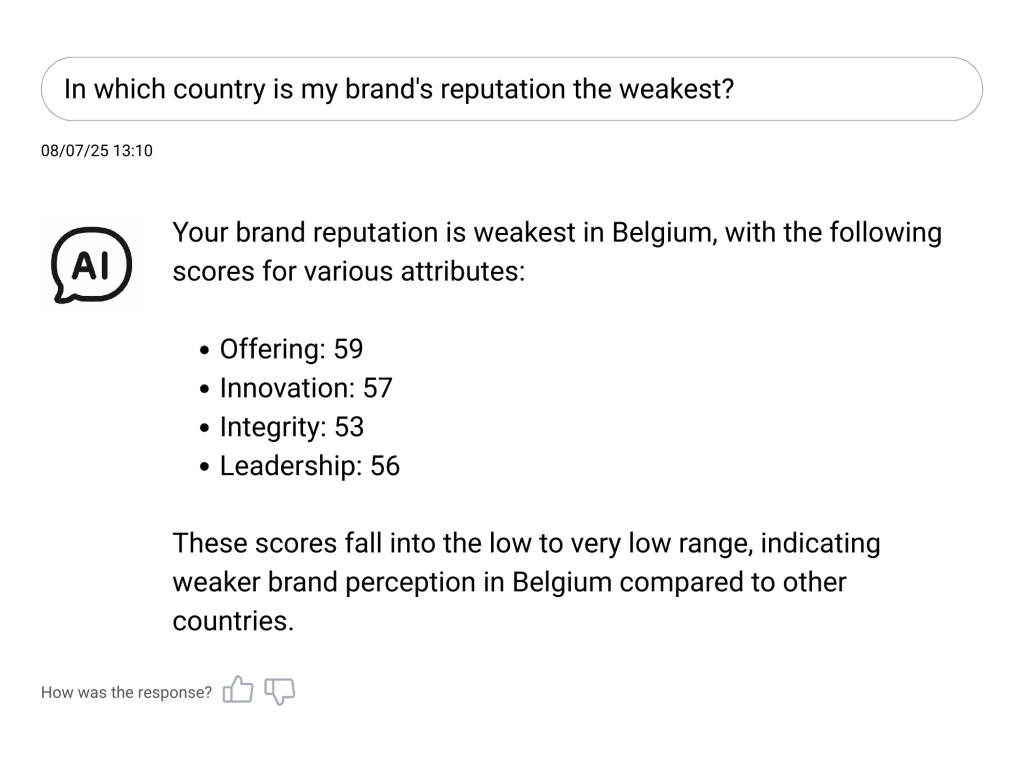
AI-assisted signal detection and rapid insight

Use Caliber’s AI assistant to surface early shifts in stakeholder sentiment, summarize what’s driving concern, and spot risks before they escalate. It helps you cut through noise, understand context, and react with clarity during fast-moving situations.

 

Automated reporting & leadership alignment

Quarterly automated reports, dashboards, and AI-driven insights help keep executives informed and confident in every decision.

Strengthen Your Crisis Communications With a Walkthrough of Your Own Reputation Data

Walk through your own stakeholder and reputation data to see how prepared your organization is for crisis communication challenges. Understand vulnerabilities, validate messaging, and strengthen trust with confidence.

→ Book your reputation data walkthrough


Crisis Communications - Everything You Need to Know

How does Caliber help companies improve their crisis communications?

Caliber provides real-time stakeholder intelligence that shows how different audiences perceive your company before, during, and after a crisis.

By tracking changes in Trust & Like Score, integrity, leadership, and brand metrics continuously, teams can identify early warning signs, respond faster, and communicate more effectively. This ensures your crisis communications are grounded in real-time evidence rather than assumptions.

How does Caliber support teams during a fast-moving crisis?

Caliber consolidates real-time reputation data, media context, and stakeholder reactions in a single dashboard.

Communications teams can quickly identify which audiences are most affected, which issues matter most, and how perceptions are evolving hour by hour.

This helps shape clear, confident crisis responses and ensures alignment across leadership teams.

How is Caliber different from social listening tools in a crisis?

Unlike social listening, which captures conversations, Caliber measures actual stakeholder perceptions — including trust, integrity, leadership, and behavioral intentions.

It provides statistically robust, representative data from the audiences that matter most — such as talent, regulators, investors, media, and informed public.

This makes Caliber a more reliable foundation for crisis decisions, especially when accuracy and stakeholder alignment are critical.

How does Caliber reveal which stakeholders are most impacted?

Caliber’s segmentation capabilities allow you to break down perceptions by audience groups — such as media, regulators, investors, employees, talent, customers, or the informed public.

This reveals who is most affected and where trust is eroding, helping communications teams deliver targeted, stakeholder-specific crisis messaging rather than one-size-fits-all responses.

Can Caliber show how media coverage influences stakeholder perceptions?

Yes. By tagging events or integrating media signals into the platform, Caliber lets you visualize how specific news stories, press cycles, or public events impact reputation metrics.

This helps teams understand which narratives are driving concern and how quickly perceptions shift in response to coverage — crucial for shaping crisis communications strategies.

How does Caliber support executive and board reporting in a crisis?

Caliber’s dashboards and automated reports translate complex stakeholder data into clear, concise insights that executives can understand at a glance.

This gives CCOs and CMOs the evidence they need to brief leadership, align on messaging, support decision-making, and demonstrate the impact of crisis communications efforts.