Independent corporate reputation rankings across trust, employer brand, ESG perceptions, and reputation drivers.
Corporate reputation rankings compare companies based on how stakeholders perceive their credibility, behaviour, and overall reputation.
Built on Caliber’s continuous tracking across markets, these rankings provide clear, comparable benchmarks—so leaders can see who leads, who is gaining or losing trust, and what’s driving performance over time.
They’re used by communications, corporate affairs, brand, and HR teams to benchmark reputation, validate strategy, and track momentum over time.
Each ranking focuses on a distinct dimension of stakeholder perception. Together, they provide a clear view of corporate reputation across markets—and how it changes over time. Select a ranking type to explore results by market and year.
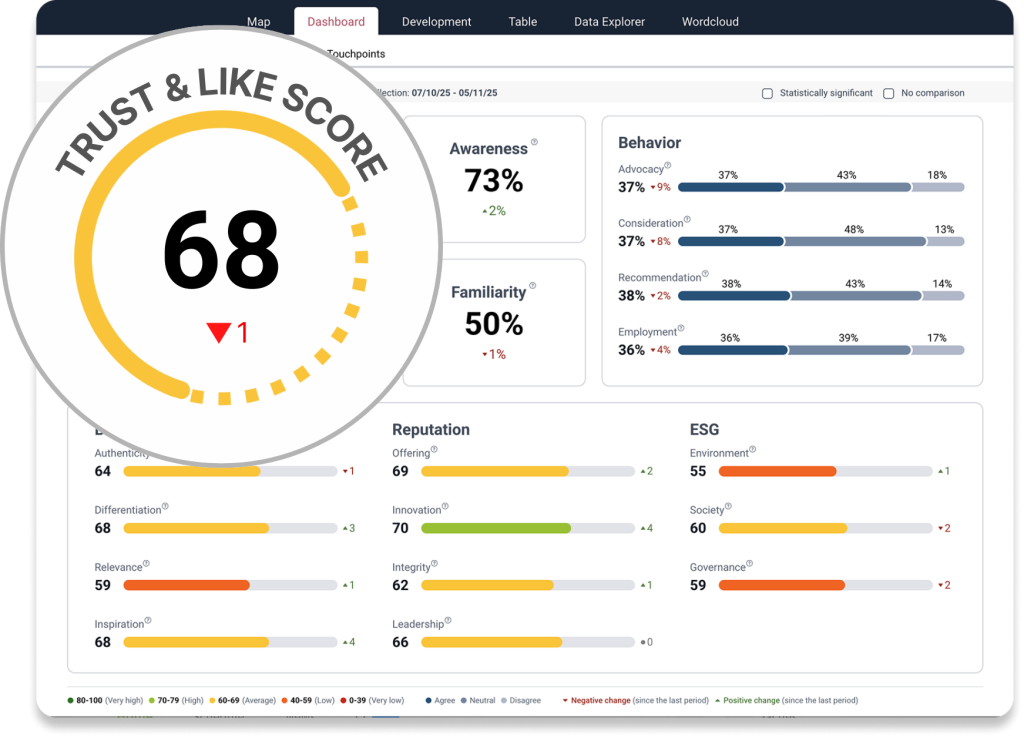
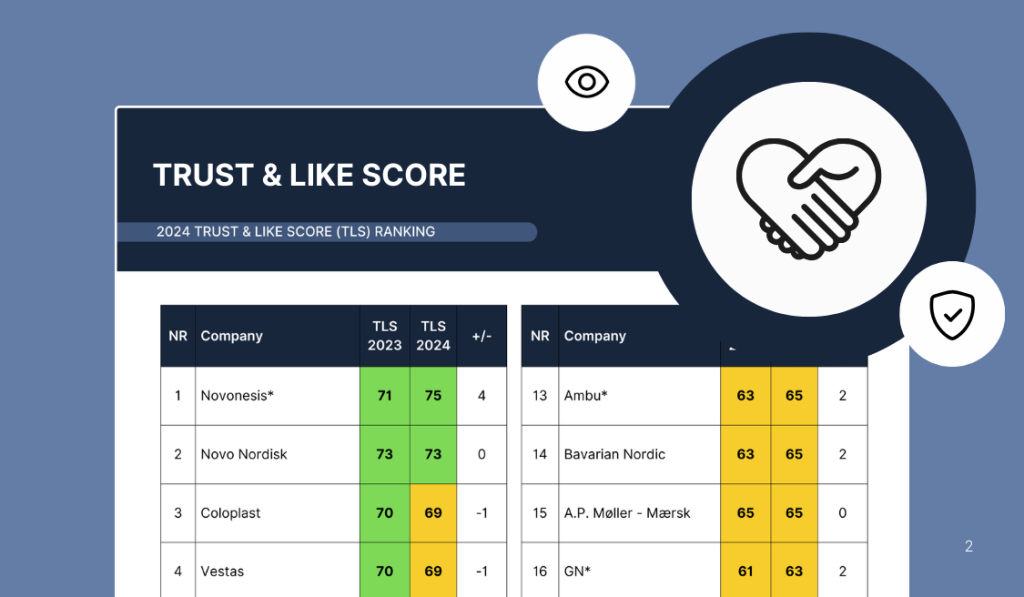
Ranks companies by stakeholder confidence, based on trust and likeability.
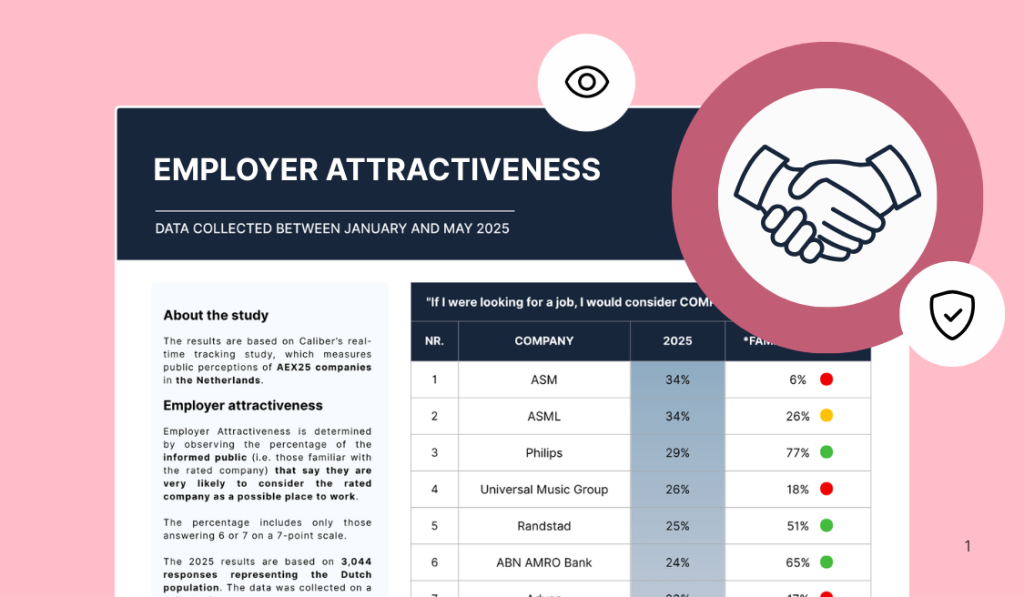
Ranks companies by how attractive they are as employers.
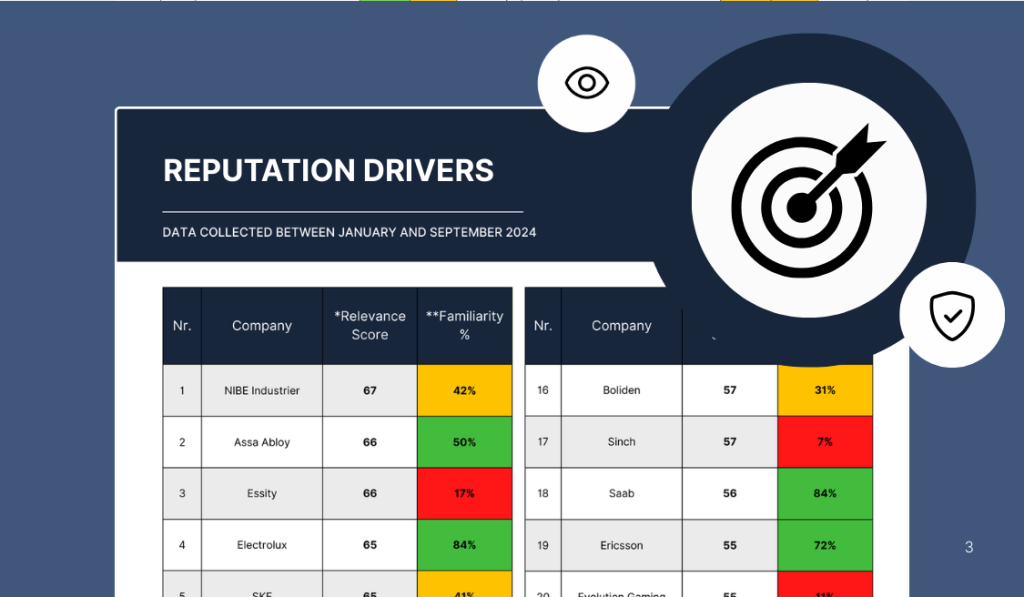
Ranks companies by the most influential reputation drivers in their markets.
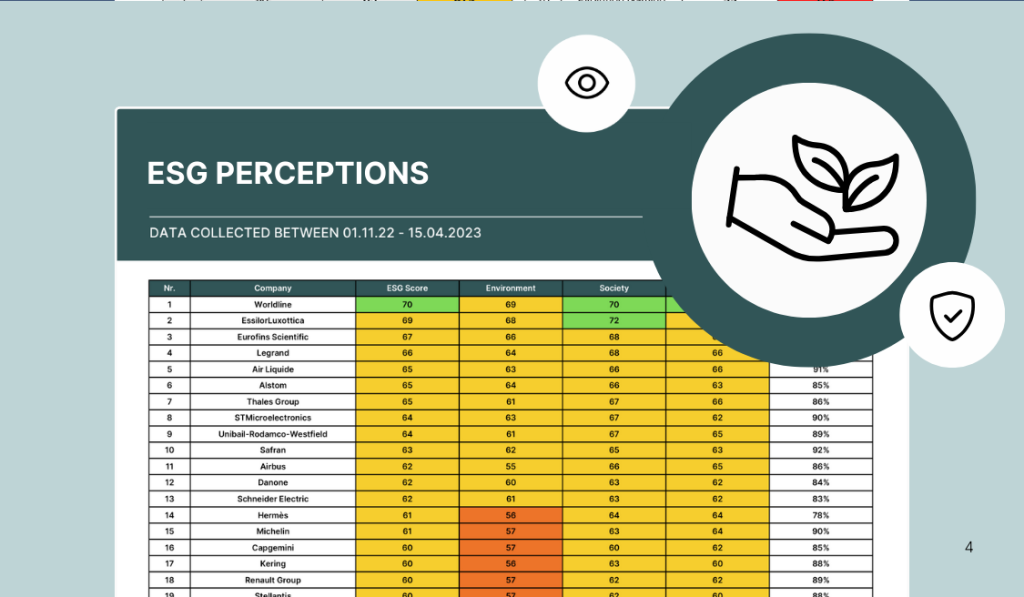
Ranks companies by stakeholder perceptions of their ESG performance.
Interviews conducted so far, with thousands added every day
Companies monitored worldwide, including largest players across all sectors
Countries in which we track perceptions of different companies and industries


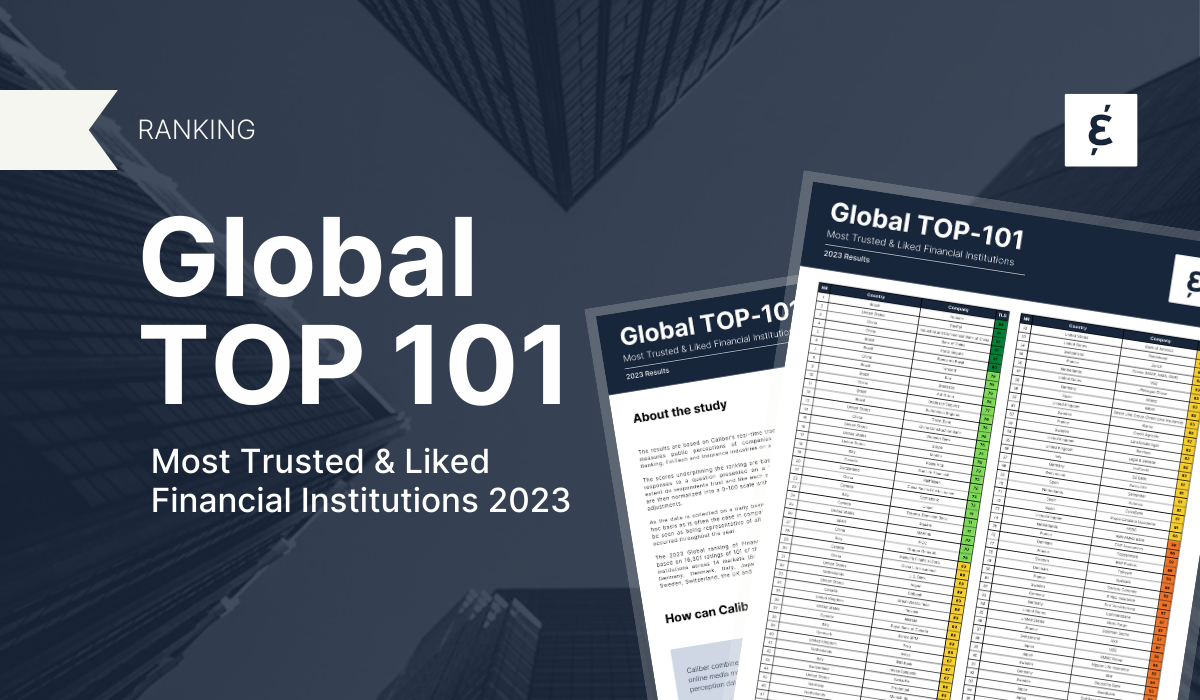
Explore global Trust & Like Score rankings for key industries—including Telecoms, Mobility, Energy, and Financial Institutions. Each ranking benchmarks a representative selection of leading companies worldwide, ranked by Trust & Like Score. These industry rankings are not currently published annually—contact us if you’d like access or a tailored benchmark for your sector.
Caliber’s Corporate Reputation Rankings are based on continuous stakeholder tracking, not one-off surveys.
We measure perceptions of the largest listed companies in each market throughout the year, using consistent questions and representative sampling.
Rankings are then published annually, providing a stable benchmark for comparing companies, tracking year-over-year movement, and understanding what drives changes in reputation.
This makes the rankings comparable year to year—and more reliable than a single point in time surveys.
Caliber helps you understand what is driving your results—across stakeholder groups, topics, competitors, and markets.
Corporate Reputation Rankings compare companies based on how stakeholders perceive their overall reputation—especially credibility, trust, and support.
They provide a benchmark for understanding which companies lead in reputation, how perception changes over time, and how you perform relative to peers in your market.
Caliber’s Corporate Reputation Rankings measure stakeholder perceptions across key reputation dimensions, including trust, employer attractiveness, ESG perceptions, and the drivers that influence reputation.
Each ranking focuses on a specific reputation lens so leaders can benchmark performance, monitor movement year over year, and understand what matters most in each market.

The rankings are based on continuous stakeholder tracking throughout the year and are published annually.
This approach provides consistent, comparable benchmarks across companies and markets—rather than a one-off snapshot.

Rankings are created using consistent questions and representative sampling in each market, enabling year-over-year comparisons.

Published rankings vary by market, and historical coverage is longer in some countries than others.
If a year isn’t listed, it doesn’t necessarily mean the data isn’t available—we may still have underlying tracking data for that period. Contact us to discuss what is available for your market and time period.
Yes. In addition to published rankings, Caliber can benchmark your company against selected competitors, sector peer groups, or custom lists within your market—so you can compare performance in the context that matters most.
No. Caliber’s Corporate Reputation Rankings are based on stakeholder perceptions collected through continuous tracking—not on self-reported submissions or company questionnaires. This provides an independent benchmark of reputation as stakeholders experience it.
Use rankings to benchmark performance against peers, track movement over time, and identify which reputation dimensions to prioritize. Rankings are most powerful when paired with driver-level insight to explain why reputation is rising or falling.
Because stakeholder expectations vary by country. What drives trust in one market may matter less in another—so rankings are published by market to reflect local perceptions and priorities.