
Although often used interchangeably, Online Reputation Management and corporate reputation management address different dimensions of reputation.
Online Reputation Management is channel-driven. It tracks digital signals: mentions, sentiment, share of voice, and conversation volume.
Corporate reputation management is perception-driven. It measures how stakeholders — customers, employees, investors, regulators, and the public — actually think and feel about an organization, and how those perceptions influence trust, legitimacy, advocacy, and behavior.
Online narratives are inputs.
Reputation is an outcome.
An organization can dominate media coverage yet experience declining trust.
Conversely, it can face temporary negative press without long-term reputational damage.
Mature organizations recognize that both digital monitoring and stakeholder perception measurement are necessary — but insufficient on their own.
While often used interchangeably, Online Reputation Management and corporate reputation management are not the same.
Online Reputation Management focuses on digital signals: what is being said online, where, how often, and with what sentiment. It is channel-driven and content-centric by nature.
Corporate reputation management, by contrast, is perception-driven. It is concerned with how different stakeholder groups actually think and feel about a company, and how those perceptions influence trust, legitimacy, and behavior. Corporate reputation exists whether or not it is discussed online, and it is shaped by direct experience, corporate behavior, leadership actions, products, governance, and long-term consistency.
The key difference is that online narratives are inputs, while reputation is an outcome. Online Reputation Management tells you what is visible. Corporate reputation management tells you what is believed. Mature organizations increasingly recognize that both perspectives are necessary, but insufficient on their own.
Most organizations begin with media monitoring tools and social listening platforms.
These solutions track:
Media volume
Share of voice
Sentiment analysis
Trending topics
Influencer amplification
Emerging risk signals
They are essential for identifying visibility spikes, reputational threats, and campaign performance.
But effective Online Reputation Management requires more than tracking dashboards.
Without interpretation and correlation to stakeholder perception, monitoring can lead to overreaction to volume, misreading of sentiment, or misplaced investment.
Best practice ORM includes:
Continuous monitoring
Competitive benchmarking
Cross-market comparison
Integration into executive decision workflows
Connection to measurable business and perception outcomes
Monitoring becomes strategic when exposure data is linked to impact data.
Online Reputation Management software generally falls into four categories:
1. Media Monitoring Tools
Track digital news coverage, journalist mentions, and earned media visibility.
2. Social Listening Tools
Analyze conversations across platforms such as LinkedIn, X, Instagram, TikTok, and forums.
3. Review and Ratings Management Platforms
Monitor and manage customer and employer reviews across Google, Trustpilot, Glassdoor, and similar platforms.
4. Enterprise Reputation Intelligence Platforms
Connect digital signals to stakeholder perception, trust drivers, and behavioral intent.
Most organizations use a combination of these approaches depending on industry, risk exposure, and stakeholder complexity.
Below is a structured overview of widely recognized Online Reputation Management tools and how they fit into the ORM ecosystem.
Online Reputation Management Tool | Description | Category |
|---|---|---|
Meltwater | One of the most established platforms in Online Reputation Management, widely used by enterprise communications teams for global media monitoring and social listening. It provides broad coverage across news, online media, and social platforms, making it particularly useful for tracking visibility, sentiment, and emerging issues at scale. | Media Monitoring, Social Media Listening |
Talkwalker | Known for its strength in large-scale social listening and AI-driven sentiment analysis. Organizations often use Talkwalker to monitor real-time online conversations, brand mentions, and trending narratives across social and digital channels, especially during campaigns or crisis situations. | Social Media Listening |
Brandwatch | Specializes in deep social media analytics and consumer intelligence. It is frequently used by marketing and insights teams to understand how brands are discussed online, identify audience segments, and analyze long-term conversation trends. | Social Media Listening |
Cision | Combines media monitoring with media database and PR distribution capabilities. It is commonly used by communications and PR teams to manage press outreach while simultaneously tracking how coverage develops across online media. | Media Monitoring & Social Media Listening |
Sprinklr | Positions itself as a unified customer experience platform, with Online Reputation Management embedded across social listening, engagement, and customer care. It is often adopted by large organizations that want to manage online conversations and responses across multiple digital touchpoints from a single system. | Social Media Listening |
Hootsuite | Best known for social media management but is also widely used for basic online reputation monitoring. It allows teams to track brand mentions and sentiment across social platforms, making it a popular choice for organizations with a strong social-first reputation strategy. | Social Media Listening |
Mention | Focuses on real-time brand monitoring across the web and social media. It is often used by smaller teams or as a supplementary tool for tracking mentions and alerts related to specific brands, executives, or topics. | Media Monitoring, Social Media Listening |
Reputation.com | Primarily oriented toward review and ratings management, particularly in consumer-facing industries. It helps organizations monitor, respond to, and analyze online reviews that influence trust and consideration. | Social Media Listening |
Birdeye | Primarily focused on managing customer reviews across platforms. It enables organizations to collect, monitor, and respond to reviews at scale, making it highly relevant for reputation visibility at the consumer level. It also includes surveys and messaging tools to proactively shape customer sentiment. | Review Tracking, Social Media Listening |
Sprout Social | Tracks online mentions across news sites, blogs, forums, podcasts, and social media. It provides sentiment analysis, reach metrics, and discussion volume tracking, making it useful for understanding visibility and tone in earned media and digital conversations. | Social Media Listening, Review Tracking |
Brand24 | Tracks online mentions across news sites, blogs, forums, podcasts, and social media. It provides sentiment analysis, reach metrics, and discussion volume tracking, making it useful for understanding visibility and tone in earned media and digital conversations. | Media Monitoring, Social Media Listening |
YouScan | AI-powered social listening platform known for advanced image recognition and visual insights. It monitors social media conversations and visual brand mentions, offering sentiment analysis and audience segmentation. | Social Media Listening, Digital Media Monitoring |
All of these platforms are highly efficient within their core expertise. They capture what is visible online — mentions, narratives, and expressed opinions.
Online reputation, however, is only one dimension of overall corporate reputation.
Caliber is not a traditional media monitoring or social listening platform.
It operates as a stakeholder intelligence layer that connects digital exposure to perception impact.
While ORM platforms capture visibility and sentiment, Caliber continuously measures structured stakeholder perceptions across dimensions including:
Trust
Reputation
Brand strength
ESG perception
Behavioral intent
Caliber integrates via live APIs with leading media monitoring providers, including Meltwater and Talkwalker, and supports additional integrations with regional providers such as Data Stampa. Media intelligence can also be delivered via partners such as Polecat.
This integration enables organizations to:
Correlate media spikes with shifts in trust
Map sentiment changes to specific reputation drivers (e.g., Integrity, Leadership)
Compare perception shifts across stakeholder groups and markets
Distinguish short-term noise from long-term impact
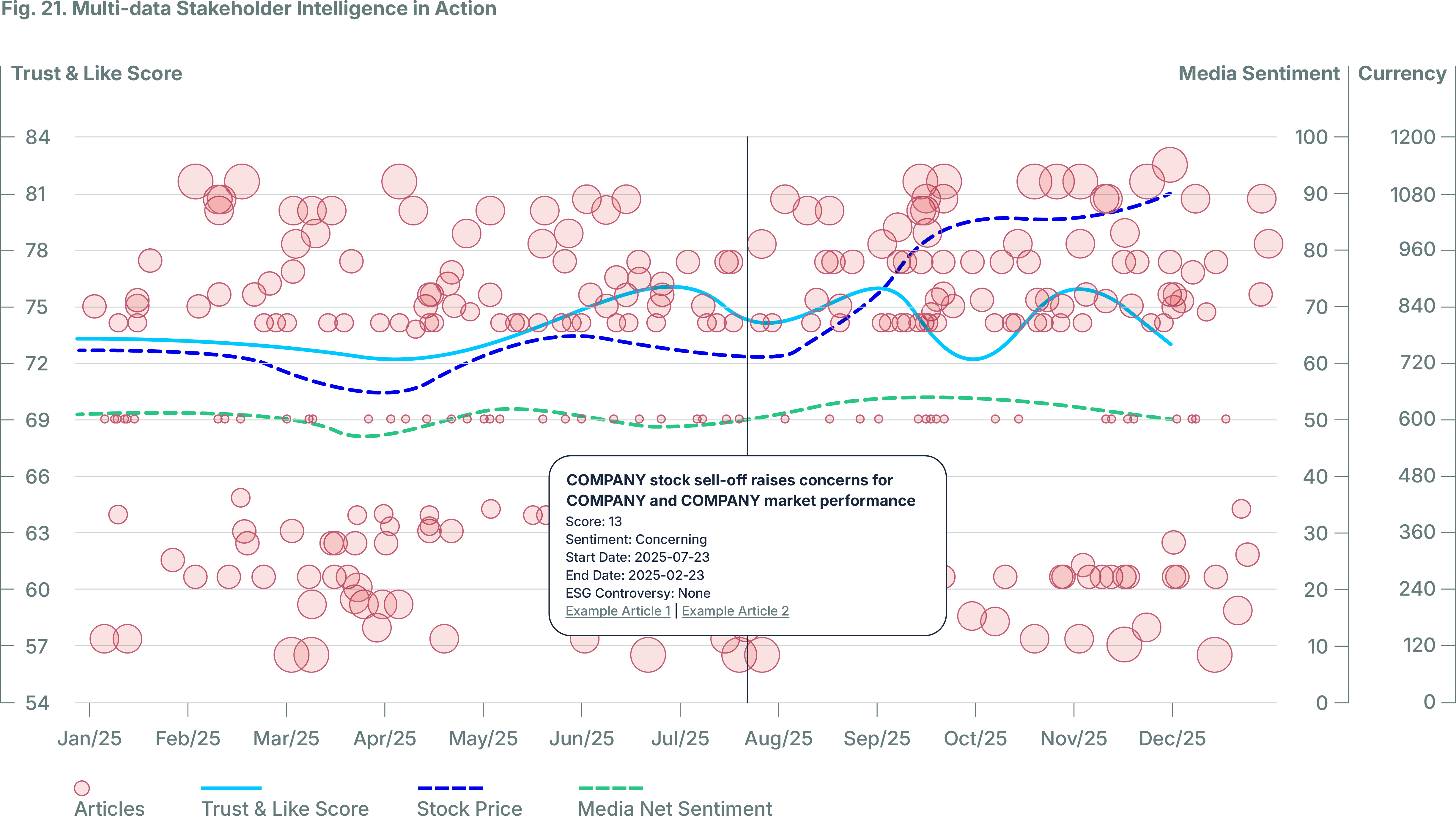
The result is a full 360-degree reputation intelligence ecosystem:
ORM tools measure exposure.
Caliber measures impact.
Together, they enable confident prioritization, clearer reporting to leadership, and measurable reputation performance management.
Relying solely on Online Reputation Management tools creates blind spots.
Online visibility does not always equal stakeholder belief.
Digital silence does not guarantee reputational strength.
At the same time, perception data without media context may miss emerging narrative risks.
Enterprise organizations increasingly combine:
Online Reputation Monitoring
Media Intelligence
Social Listening
Structured Stakeholder Intelligence
This integrated approach transforms reputation from a reactive function into a measurable strategic asset.
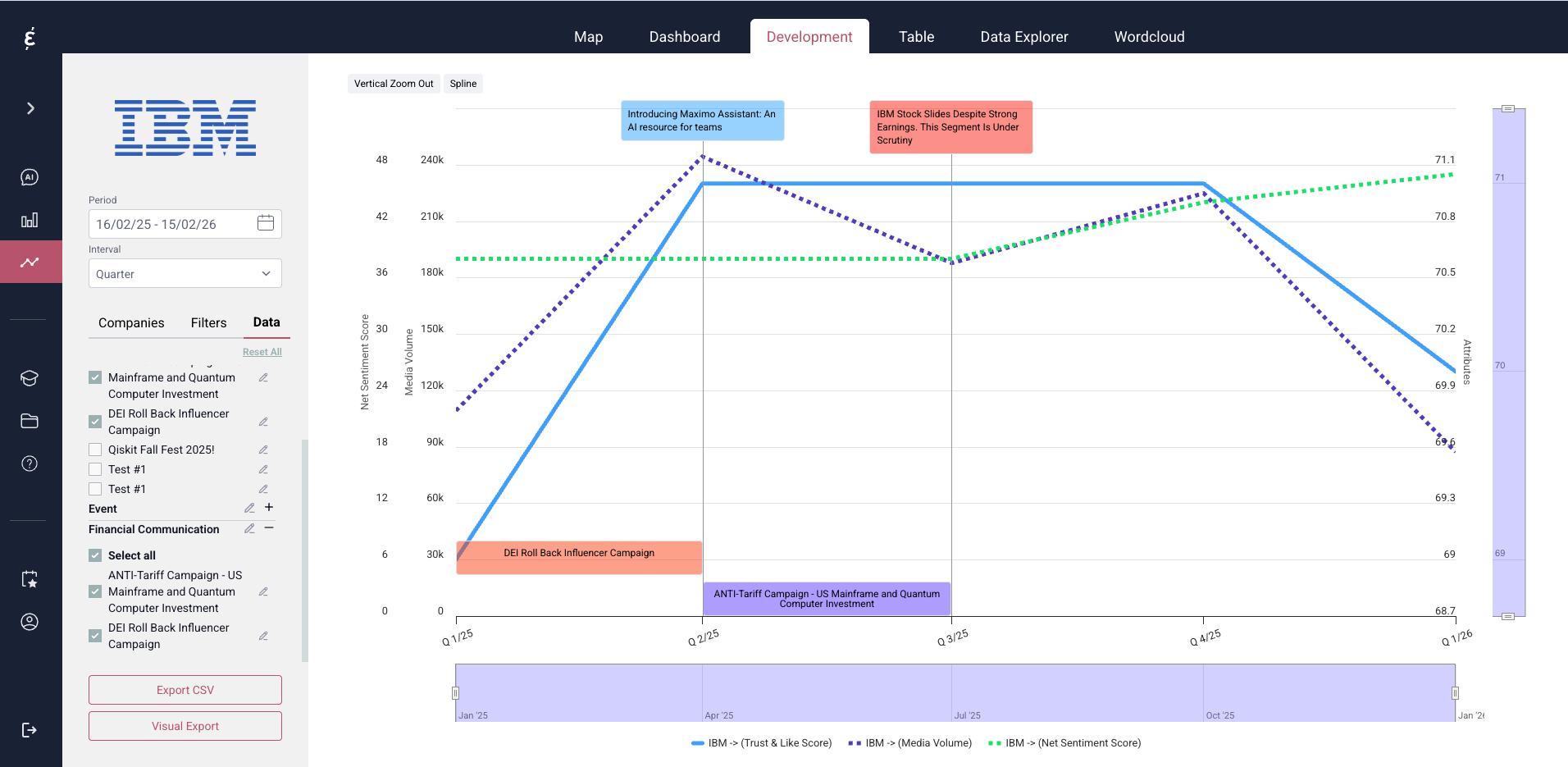
As digital ecosystems grow more complex, Online Reputation Management is evolving from a tactical monitoring function into a strategic capability.
The future lies in integration.
Organizations that combine digital monitoring with real-time stakeholder intelligence can move beyond tracking what is said — and instead manage what truly matters.
Reputation is not a collection of online metrics.
It is a measurable driver of trust, resilience, and long-term value.
Follow Caliber
Get the results of our latest research directly in your inbox!
Online Reputation Management (ORM) is the practice of monitoring and influencing how an organization is perceived across digital channels such as news media, social platforms, forums, and review sites. It focuses on tracking visibility, sentiment, and narrative trends to understand what is being said about a company online.
Leading Online Reputation Management tools include Meltwater, Talkwalker, Brandwatch, Cision, Sprinklr, Sprout Social, Birdeye, Reputation.com, Brand24, and YouScan.
These platforms specialize in media monitoring, social listening, or review tracking. The best solution depends on whether your priority is earned media visibility, social engagement analysis, or customer ratings management.
No. Social listening measures online conversations, sentiment, and engagement across digital platforms.
Reputation management is broader. It focuses on how stakeholders actually perceive an organization — including trust, credibility, leadership, ESG performance, and behavioral intent. Social listening provides valuable inputs, but it does not measure stakeholder belief directly.
Most ORM tools measure digital exposure and sentiment. They do not directly measure trust, reputation drivers, or behavioral intent across stakeholder groups.
Measuring trust requires structured stakeholder intelligence. Platforms such as Caliber complement media monitoring tools by continuously measuring trust, reputation, brand perception, ESG evaluations, and behavioral outcomes across defined audiences.
Caliber integrates with leading media monitoring and social listening platforms via live APIs.
This allows organizations to correlate digital signals — such as media volume or sentiment spikes — with real-time shifts in stakeholder perception. By combining exposure data with structured trust and reputation measurement, companies gain a full 360-degree view of reputation performance and impact.
Online monitoring shows what is visible. Stakeholder intelligence shows what is believed.
When integrated, organizations can:
Distinguish short-term media noise from meaningful perception shifts
Identify which narratives influence trust and behavior
Prioritize communications based on measurable impact
Demonstrate reputation ROI to leadership
This combined approach moves reputation management from reactive tracking to strategic performance management.
![Caliber Releases Inaugural Stakeholder Intelligence Report [Press Release]](https://www.groupcaliber.com/wp-content/uploads/2026/02/Caliber-Stakeholder-Intelligence-Report-Cover-1.jpg)