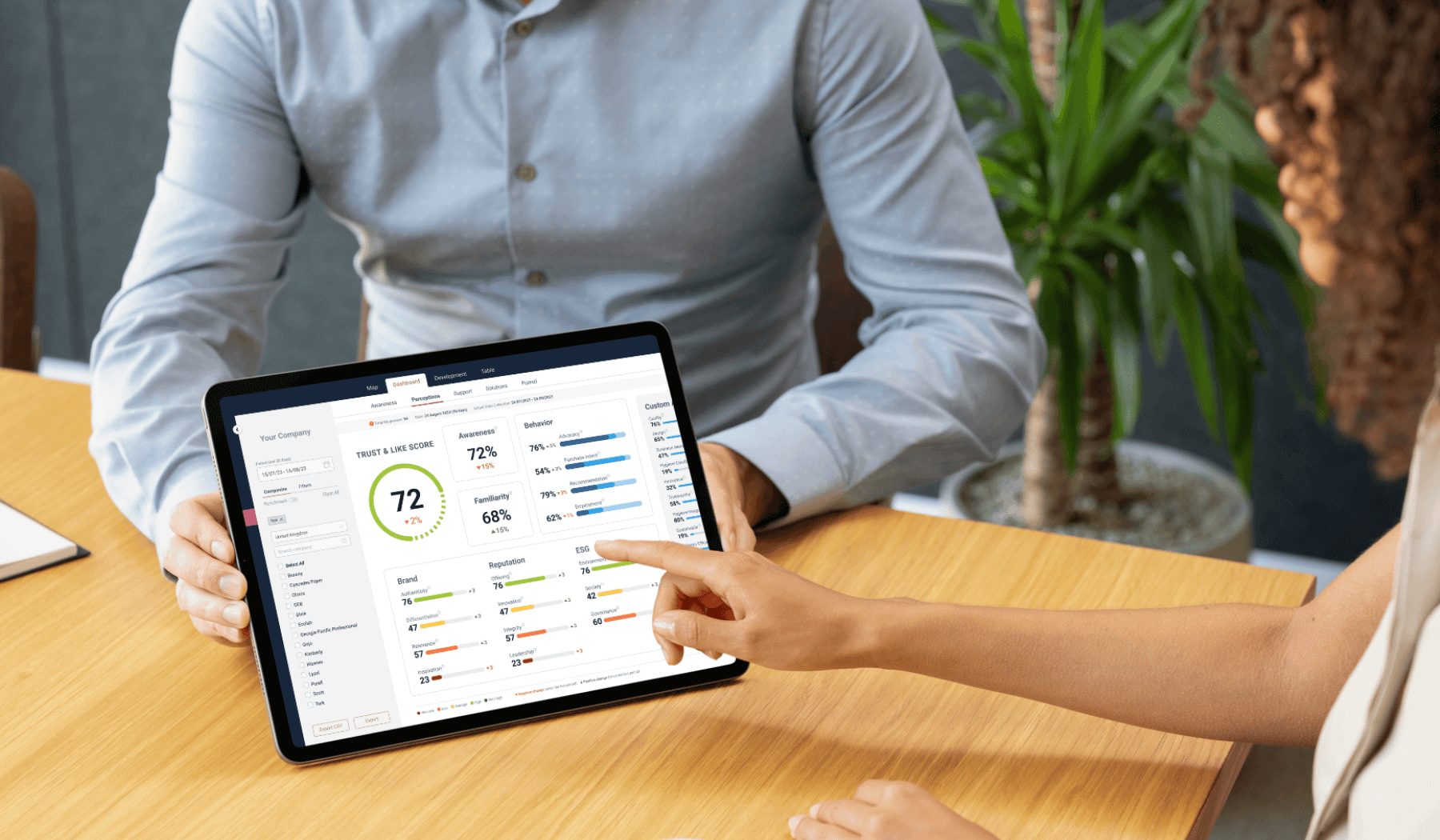
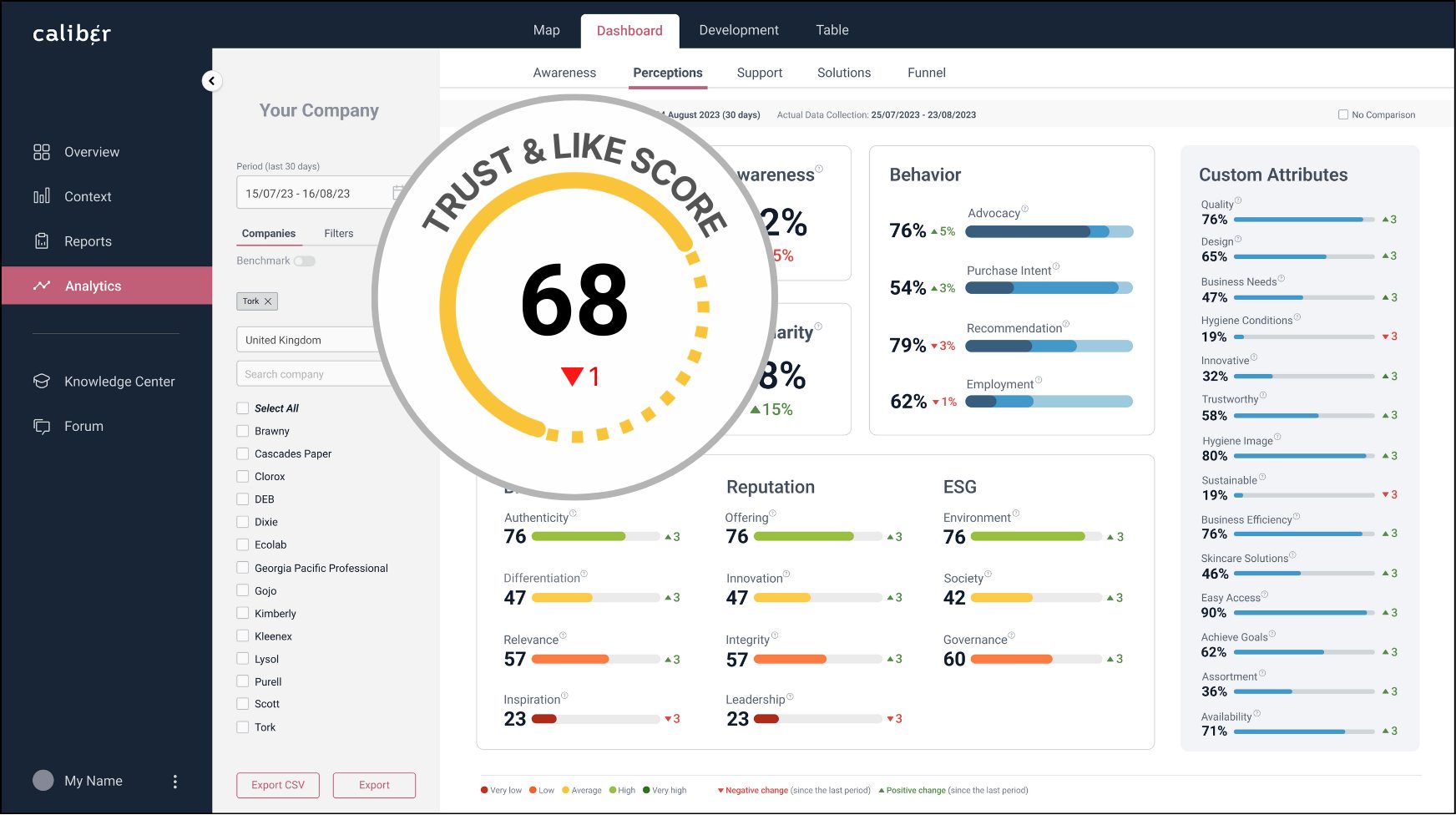
The Trust & Like Score (TLS) is Caliber’s primary reputation metric. It captures the emotional connection people feel toward your company—specifically, the degree to which they trust and like it. These two emotions have been statistically proven to be the strongest predictors of stakeholder behavior, including buying, recommending, advocating, investing, and seeking employment.
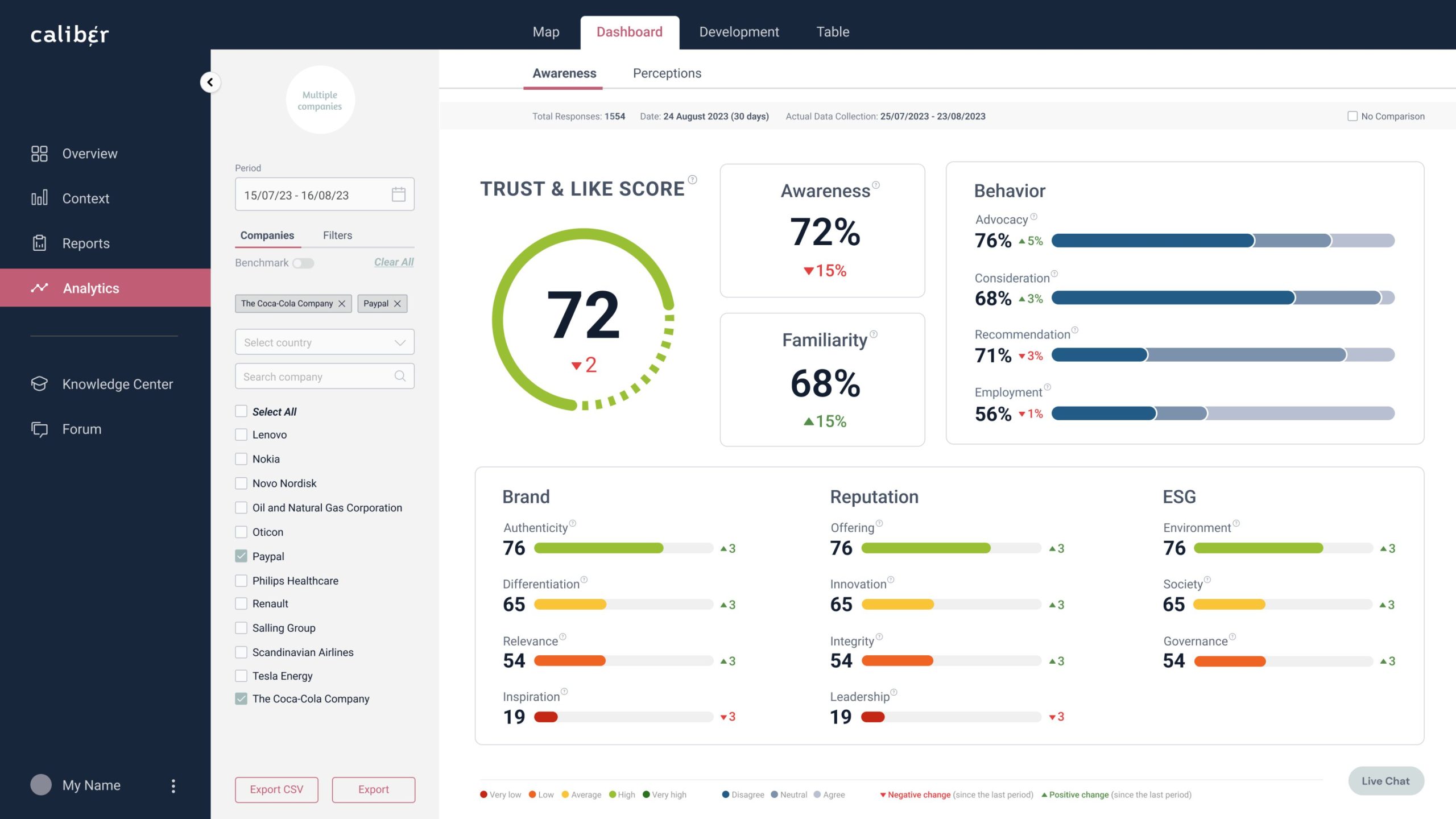
The score reflects stakeholders’ emotional attachment, based on two standardized statements measured on a 1–7 scale:
“[Company] is a company I trust.”
“[Company] is a company I like.”
Responses to these statements are averaged and normalized to a 0–100 scale, where 0 is the lowest possible sentiment and 100 the highest.
This makes the Trust & Like Score an intuitive “north star” for emotional reputation: a higher score means people feel more positively connected to the company.
1. It’s Easy to Understand
Unlike complex indices, the score is intuitive and accessible for all stakeholders—from the board to the frontline.
2. It’s Emotion-Driven
Emotions drive behavior. The score captures that emotional core, making it more predictive than purely rational assessment tools.
3. It Updates Continuously
Daily updates allow organizations to monitor sentiment in real-time, react quickly, and assess the impact of actions instantly.
4. It’s Benchmarkable
Companies can compare their score to competitors, industry leaders, global brands, or national norms.
5. It Supports Decision-Making
By connecting perception to business outcomes, the score helps leaders prioritize initiatives and allocate resources to areas with the highest reputational leverage.
The Trust & Like Score sits at the core of Caliber’s stakeholder perception model, which is built on the principle that emotions—particularly trust and affinity—drive behavior.
According to Caliber’s methodology:
Awareness & Familiarity
What people know about a company shapes how they interpret new information.
Rational Perceptions (Reputation, Brand, ESG)
These perceptions form the cognitive foundation of how stakeholders evaluate a company.
Trust & Like Score (Emotional Perception)
Rational perceptions feed into emotional reactions—specifically trust and like.
Supportive Behaviors
Strong trust and like levels lead to real-world actions such as recommendation, advocacy, consideration, and employment interest.
The internal statistical tests—Cronbach’s Alpha, SEM modeling, regression analysis—confirm that the Trust & Like Score is reliable, consistent across markets, and highly predictive of behavior.
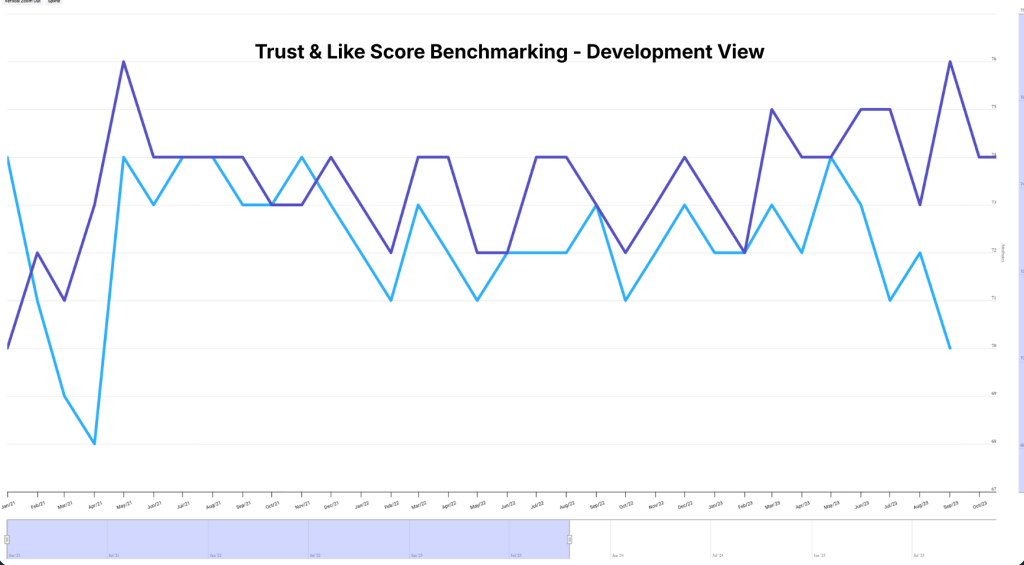
Caliber collects perceptions continuously through representative surveys in each monitored market. This means your Trust & Like Score updates daily, giving you a near real-time view of shifts in public sentiment as events, communications, or incidents unfold.
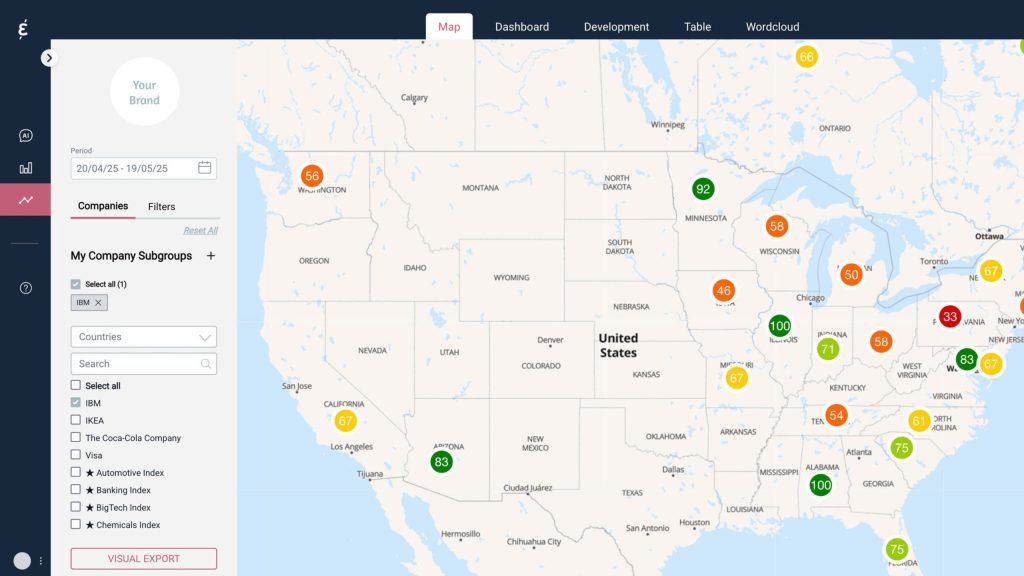
The model is validated across 40 countries for cross-cultural reliability, but the scores themselves are not culturally adjusted. Each country’s score represents the unaltered sentiment of its own population, making within-market benchmarking the most meaningful approach.
A strong Trust & Like Score indicates:
Greater brand resilience
Higher likelihood of supportive stakeholder behavior
Stronger performance in talent attraction and retention
Reduced reputational risk
A more stable foundation for business growth and crisis navigation
Because it is simple, intuitive, and backed by rigorous statistical validation, the Trust & Like Score serves as the anchor metric for understanding, tracking, and improving reputation.
You may also be interested in
Follow Caliber
Get the results of our latest research directly in your inbox!
Caliber surveys the general public and target stakeholder groups (e.g., consumers, employees, jobseekers, local communities) depending on the markets and audiences a company chooses to monitor.
The score updates daily, giving companies near real-time visibility into changes in public sentiment.
Yes. Companies can view Trust & Like Scores for different segments such as age groups, gender, regions, and more, depending on the setup of their tracking program.
High trust and likeability correlate with stronger buying intent, greater advocacy, higher employer attractiveness, and better crisis resilience — all of which can be monitored through Caliber’s behavioral KPI predictions.
It can — especially during events such as crises, major announcements, leadership changes, or large communications campaigns. Daily updates allow companies to see both short-term shifts and long-term trends.
Yes. Caliber’s platform supports competitive benchmarking within industries, across markets, or against global and national leaders.
Not necessarily. Trust & Like Scores often vary across countries because people’s perceptions differ based on cultural context, market maturity, and local experiences.
Caliber does not apply cultural adjustments or normalization to force scores to align across markets. Each country’s score reflects the real sentiment of its own representative population.
Although the model has been rigorously validated for cross-cultural consistency (see statistical validation across 40 countries in the methodology), the scores themselves remain authentic market-level results. For this reason, the most meaningful comparisons are typically within the same market, rather than across countries.
Yes. Many companies use the score in ESG reports, annual reports, brand health updates, and internal dashboards to communicate reputation performance.
Thursday, October 8th l 17:30 CET/ 8:30am PT/ 11:30am ET